What are AI deepfakes?
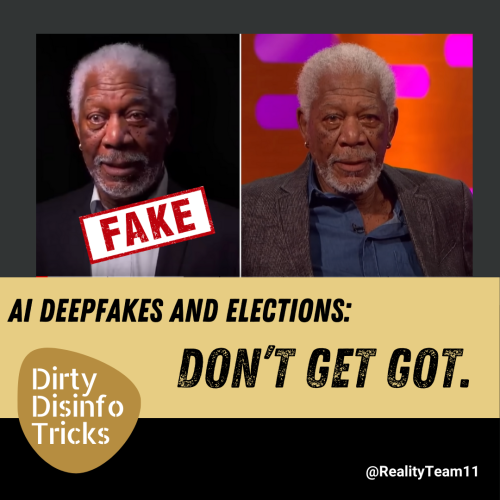
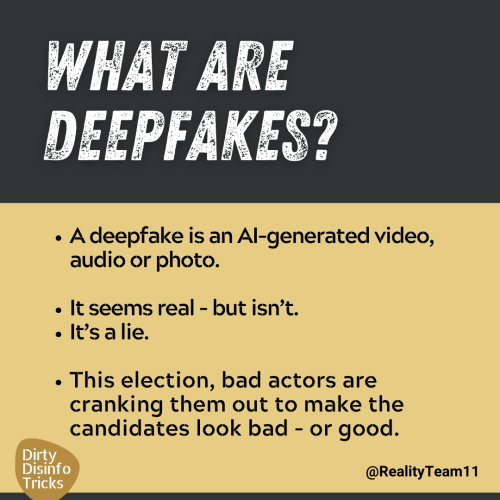
A deepfake is an AI generated image or video.
In other words, it’s a lie.
Why do we care?
Bad guys and foreign governments are cranking them out to convince us that politicians did things they didn’t do. Some make them look bad. Some make them look good. Some could panic the country.
Fake images aren’t new. But AI is making them better, easier, and cheaper for bad actors to use.
Show me some examples:
Here is a whole page of recent political deepfakes of Biden and Trump.
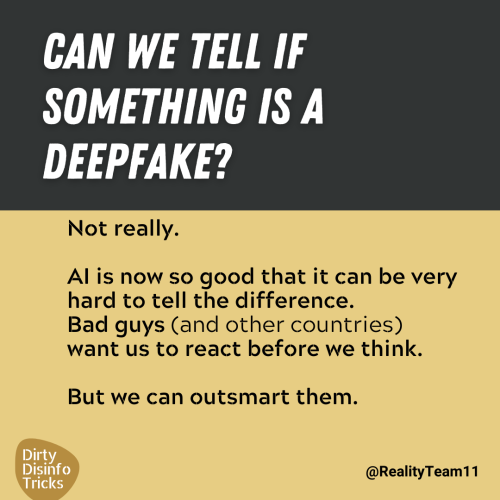
Can we spot deepfakes?
Not reliably. The technology is good enough now that it takes an expert – and even they can be fooled.
How do we outsmart the trick?
- Recognize red flags.
- Build better reflexes (think before we react).
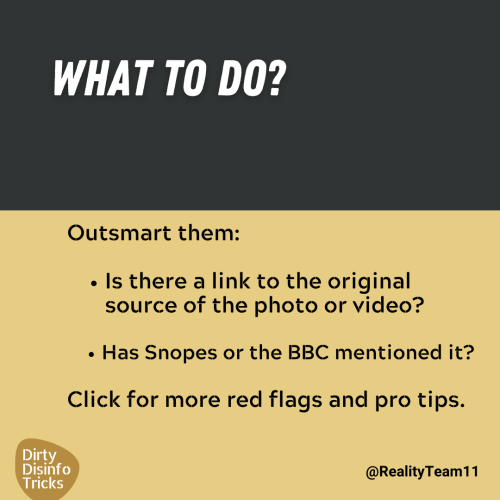
- Find out where an image came from.
- Learn some basic fact checking.
Recognize red flags
…and learn to think before we react. (That last part takes some practice).
RED FLAG 1: No Source
An image, video or audio that doesn’t link to or explain where it came from is often fake or manipulated.
Don’t share till you check.
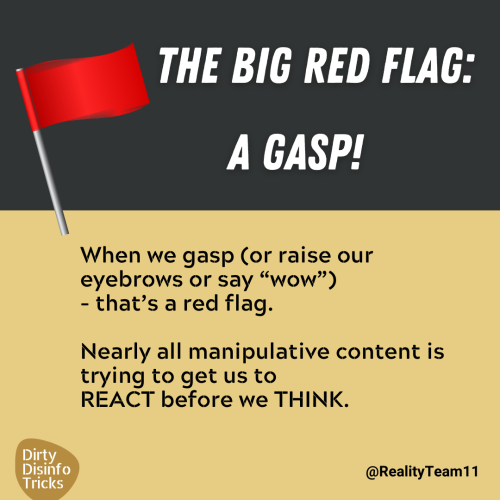
RED FLAG 2: Something shocks or angers you.
Bad guys want us to react before we think.
Unfortunately, we’re kind of wired to do that – but we can build a better reflex.
Bad guys make stuff that shocks us or makes us furious, or even think “how cute”.
When we gasp at a post or a video – that’s a big red flag. It might be real – or it might be someone trying to manipulate us.
Sometimes it’s a joke – we keep getting got by the parodies.
2. Build better reflexes
Bad actors use propaganda tricks to get us to stop thinking. The more they can get a Before we react – ask:
- Is it real?
- Where did it come from?
- Can I trust them?
3. Find out where an image came from: reverse image search

- You can find out where it came from with a reverse image search: Use the Google App to do a reverse image search.
- Do what they call “Lateral Reading” In other words, check snopes.com, a mainstream news site, or politifact.org. You may not like their take on the issue, but serious news outlets won’t spread things they haven’t checked out.
3. Fact check like a pro: S.I.F.T.
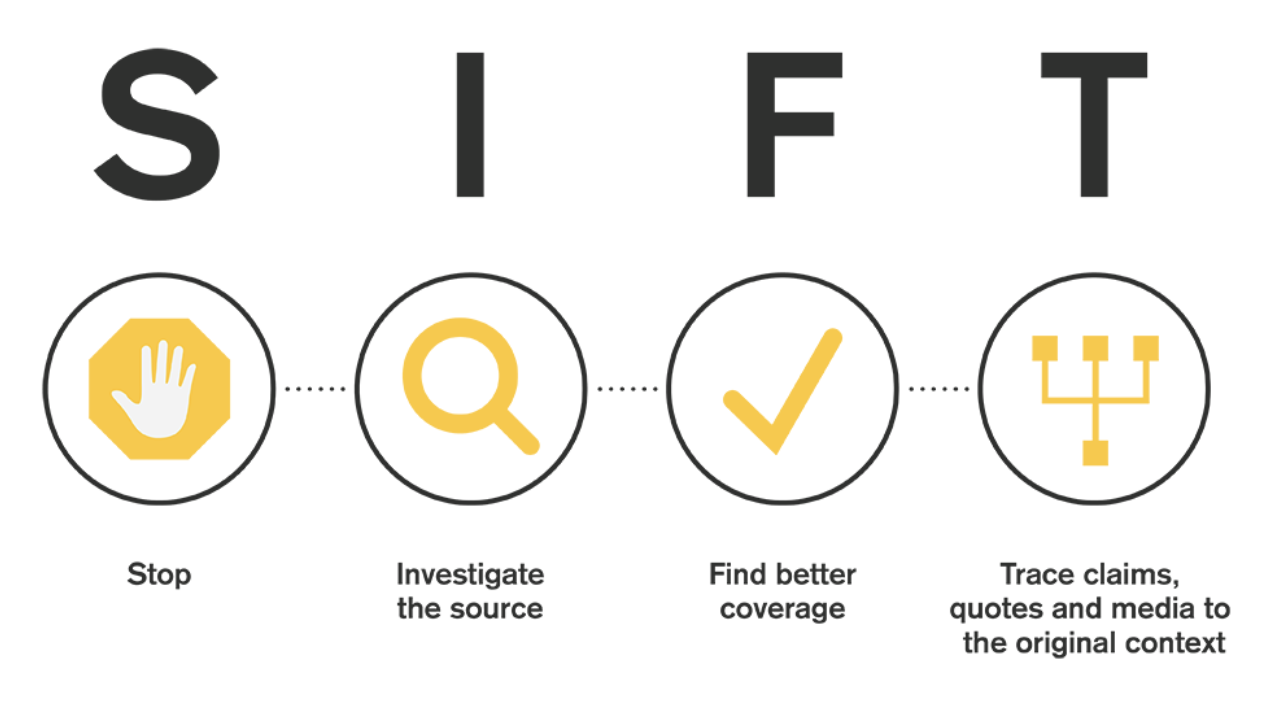
Want to be smarter about what you’re seeing and hearing online?
Experts recommend using the SIFT method:
- Stop.
- Investigate the source.
- Find other coverage.
- Track the original.
Pressbooks: The SIFT Method
Diep Nep (Youtube): This is not Morgan Freeman – A Deepfake Singularity
Department of Homeland Security: Increasing Threat of Deepfake Identities
Fox 10 Phoenix: Deepfake: What is it, and why is it so dangerous?
Associated Press: Chatbots’ inaccurate, misleading responses about US elections threaten to keep voters from polls
Related Cards