Scapegoating
What is scapegoating?
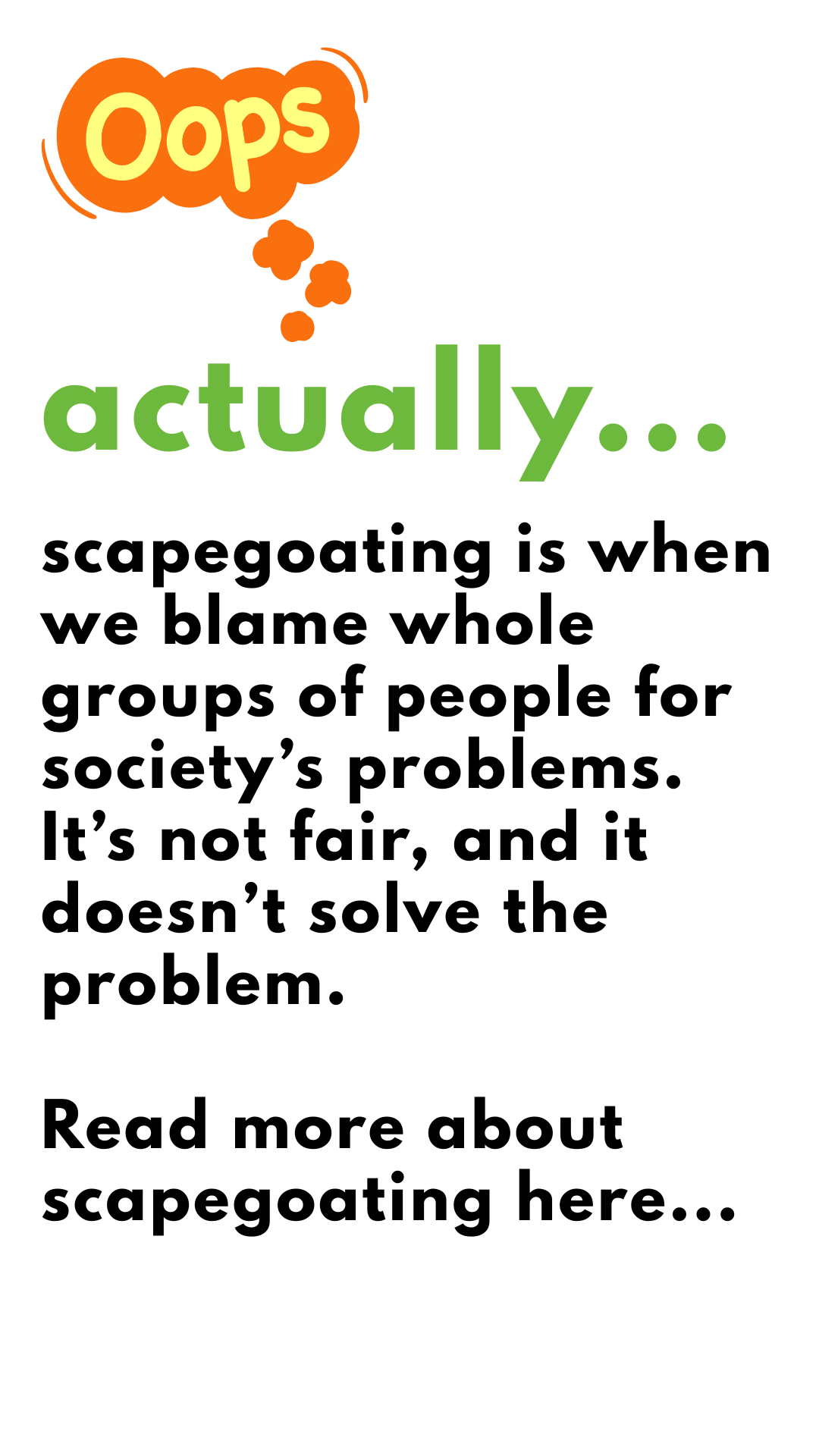
Scapegoating occurs when we unfairly blame an entire group of people for societal ills. For example, Jews were falsely blamed for the black death (the plague) in the Middle Ages, which led to mass violence and pogroms.
Today, scapegoating and conspiracy theories often go hand-in-hand.
What are conspiracy theories?
Conspiracy theories can be defined in a variety of ways.
In general, they reject established and accepted narratives, implying that sinister and powerful forces are manipulating various events and situations behind the scenes, usually for political gain. For example, a conspiracy theorist might claim that the U.S. and Israeli governments orchestrated the 9/11 attacks in order to stoke public outrage against Israel’s antagonists in the Middle East, or that the British royal family conspired to murder Princess Diana because they disapproved of her then-boyfriend.
Conspiracy theories have been around for centuries, and often emerge from a need to make sense of the world around us. Some conspiracy theories, like the great replacement theory, are associated with various right- or left-wing ideologies, while others transcend political lines, like those surrounding the assassination of John F. Kennedy or Area 51.
While some conspiracy theories–such as claims that Paul McCartney died decades ago and was replaced by a “body double” – are relatively harmless, other theories sow division, undermine trust in institutions and justify violence.
They can also be used to demonize groups of people, such as false claims that LGBTQ+ people are “grooming” children or claims that a Jewish cabal controls world governments. Under the right circumstances, conspiracy theories can motivate people to violence, as seen during the January 6 insurrection and mass shootings in Buffalo, El Paso and Christchurch, New Zealand.
How do conspiracy theories work and how can you spot them?
There are real reasons for people to distrust governments, corporations and other powerful figures and groups. Actual conspiracies and cover-ups occur quite regularly; Watergate, the Tuskegee experiments and COINTELPRO were all real events.
However, while real conspiracies do exist, this doesn’t mean that every event or situation is the result of a nefarious plot or that powerful figures are always trying to hide the truth.
This conundrum poses an important question: How do we differentiate between real conspiracies and conspiracy theories?
How can we spot a conspiracy theory?
One of the best ways to spot conspiracy theories is by learning about the different tactics that conspiracy theorists often use to draw people into believing disinformation.
A common tactic that conspiracy theorist sources often use is called scapegoating.
Scapegoating
Scapegoating occurs when a person or group is singled out or takes unwarranted blame for a serious and complex problem. The complexity of that problem is reduced to the role played by this individual or group, who cannot reasonably be responsible for the entire problem.
Scapegoating is commonly seen throughout history, but it remains common even today.
Often, scapegoating intensifies in times of anxiety or uncertainty—for example, during economic downturns, wars, or pandemics. You likely still hear the phrase ‘poisoning the well,’ which originated during the Black Plague when people started blaming the rapid spread of disease on Jews poisoning public drinking wells. Absent the scientific knowledge that would have explained the spread of illness, this conspiracy theory spread rapidly, even leading to mass violence against Jews who were wrongly blamed.
Tips to spot conspiracy theories
Today, conspiracy theories seem to be spreading even more rapidly.
While the internet has made it easier for us to connect with each other and share information, it’s also made it easier for conspiracy theories and misleading information to spread. We can all fall for conspiracy theories and unintentionally aid their spread. That’s why it’s crucial for all of us to learn how to spot them.
Here are some suggestions:
Check the source of the information.
If you haven’t heard of the author or publication, do some research to assess how trustworthy they are.
Is the social media user who shared this information reliable? Are they attached to a reputable organization or are they a self-proclaimed expert? Where did they get this information from?
Additional red flags are raised when articles contain lots of grammatical errors, lack sources or are all written by the same author, or if a website contains an unusual URL or lacks an “About Us” section.
Check multiple sources.
Are other, credible news outlets and experts sharing the same information? If a story is real, many publications will cover it.
Have fact-checking sites like Snopes and PolitiFact refuted the claims?
Evaluate photos and videos that accompany stories and social media posts.
Conspiracy theorists will often use old and/or manipulated images to support their stance.
Conduct a reverse image search on Google or TinEye to see if the image has shown up elsewhere and if it has been manipulated. If it has, there’s a good chance you’re being played.
Think before you share.
Does the story sound too good (or bad) to be true? Is the tone objective and factual, or is it sensationalist? Does the headline accurately reflect the story?
Conspiracy theories and misleading information thrive by invoking a strong reaction from believers. If the information upsets you or makes you angry, it could be a sign that you’re being manipulated.
What can you do to help those who have fallen for conspiracy theories?
Rather than debunking conspiracy theories after they’ve spread, a more effective strategy is to “pre-bunk” conspiracy theories, which means inoculating people before they are exposed.
This involves “warning people that a specific piece of information is false and explaining why a source might lie or be misinformed about it before they encounter the information organically,” according to researchers. For example, talking to people about scapegoating and how to spot it can better equip them to recognize a conspiratorial claim that uses this common tactic when they see it.
Luckily, there is a wealth of information about these tactics and resources to help you spot them. Inoculation science, a project of social scientists at Cambridge University, is one such resource, where you can learn more about scapegoating as well as other common disinformation tactics.
Inoculation Science: Homepage
Inoculation Science: Scapegoating
ADL: Conspiracy Theories and How to Help Family and Friends Who Believe Them
Related Cards