Red Herring Fallacy
What is a red herring fallacy?
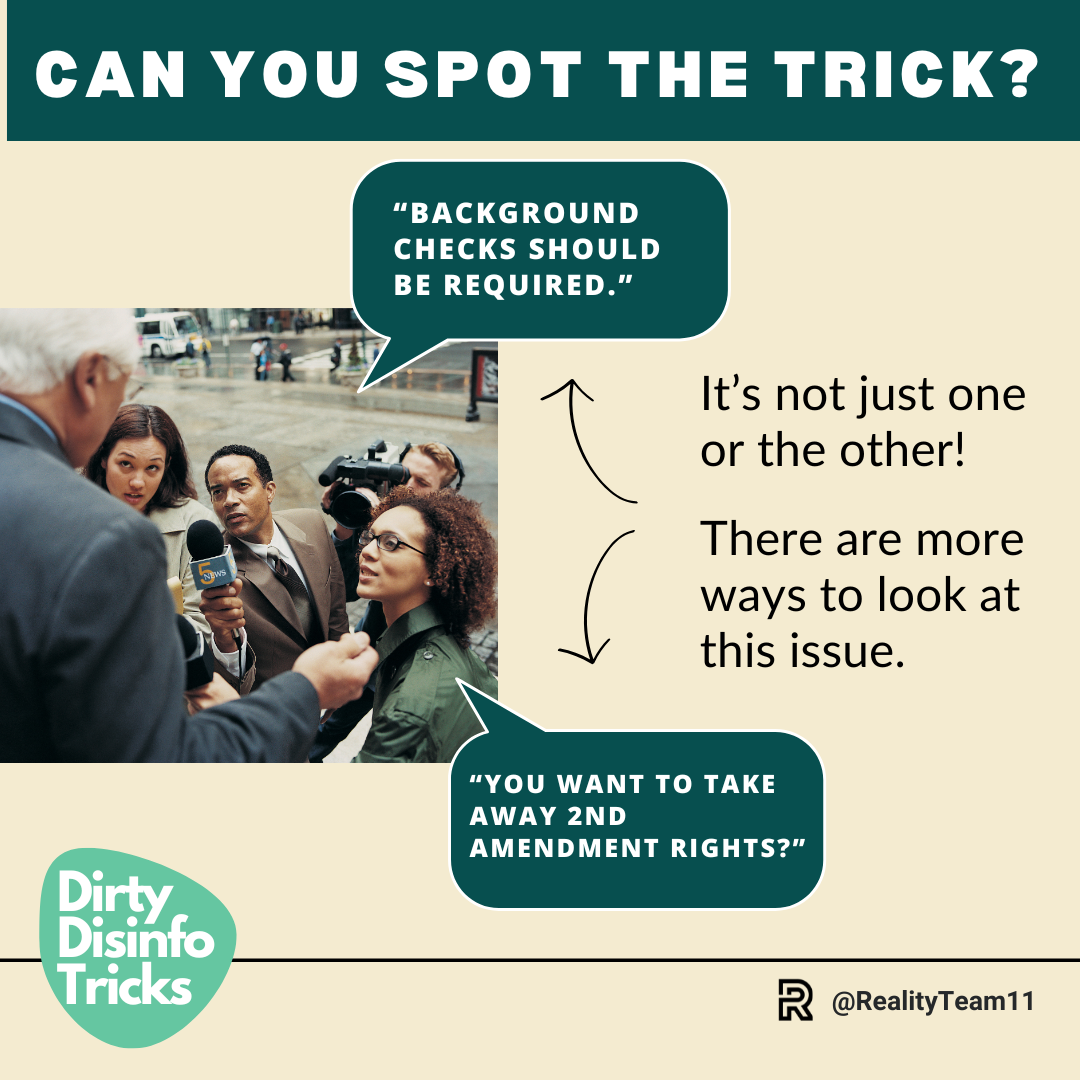
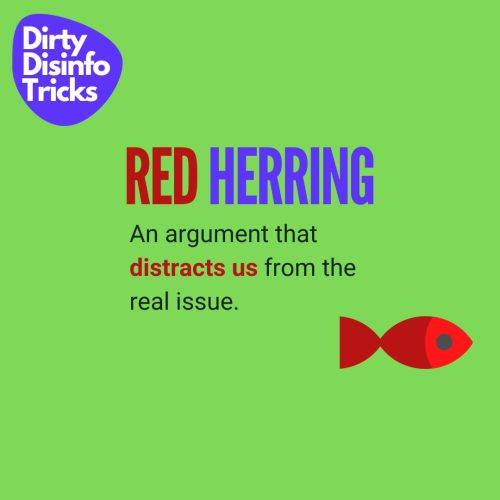
A red herring is a logical fallacy where someone uses something else in a discussion to change the subject and refocus or reframe the conversation on the distraction. It is like they’re saying, “Hey, look over there!”
Other people sometimes call the red herring fallacy “beside the point,” “misdirection,” “changing the subject,” or “clouding the issue.”

What are logical fallacies?
Red herrings are a type of propaganda technique called logical fallacies. Logical fallacies happen when there is a pattern of reasoning that contains a flaw, either in the way it’s structured or in the meaning behind it.
Where you have seen red herrings before
A lot of movies and books use this technique.
Have you ever seen a movie where you thought the bad guy was one person, and then it turned out to be someone else?
Manipulators use red herrings the same way. They’ll give us unimportant information that’s irrelevant to the topic. They want to distract us from what we really want to know or what we’re asking about.

What do red herring fallacies look like?
What do they look like? A candidate might answer an accusation of sexual misconduct by talking about how his company hires lots of women. A president might change the subject to distract us from a policy weakness.
That video example and other instances of red herrings can be seen at The Propwatch Project.
Another popular example has to do with climate change. Maybe you’ve heard a climate change skeptic say that a group of “experts” have signed a letter denying that climate change is an issue, but those “experts” aren’t even climate change scientists (and that ties into another trick bad actors use called fake experts).

This tweet by a U.S. congressman tries to distract us from the failure of the Texas electric grid during a massive ice storm.
He tries to divert our attention by telling us to blame wind turbine power while ignoring the failure of other energy sources.
This argument works because we are easily distracted, especially by arguments that sound like something we should be focusing on.





How to spot a red herring fallacy
Red herrings can be in your face or super subtle. Here are some ways we can recognize them in the wild:
- Is the point of the conversation changed by the person’s argument or statement?
- Is the argument or statement actually a justification or is it unrelated to the original topic?
- Is the argument or statement a rebuttal related to the topic, or does it rebut something else?

Once we spot the red herring we can respond. Sometimes we can just tell the person that the statement isn’t relevant. Then we can bring the topic back around to the original point.
Sometimes the person we’re talking to won’t let the subject go back. We can either accept that the topic’s changed or finish the conversation. We don’t have to debate people, especially if the topic continues to be on their terms. It’s super unproductive and gets us nowhere.

Texas State University Department of Philosophy: Red Herring
Logically Fallacious: Red Herring
Effectiviology: Logical Fallacies: What They Are and How to Counter Them
The PropWatch Project: red herring - throwing one irrelevant fact into an argument to divert attention from the real issue at hand.
Develop Good Habits: 5 Red Herring Fallacy Examples to Fight Irrelevant Information
https://twitter.com/cerebralistic/status/1157371682362806272?lang=en
https://www.instagram.com/p/CB9O6PFjNco/
https://twitter.com/Ukraine/status/1275391304181125121 .
https://www.facebook.com/photo.php?fbid=969021073746671&set=p.969021073746671&type=3
https://www.facebook.com/photo/?fbid=4234663386562810&set=a.1451160094913167
Related Cards