Do Your Own Research
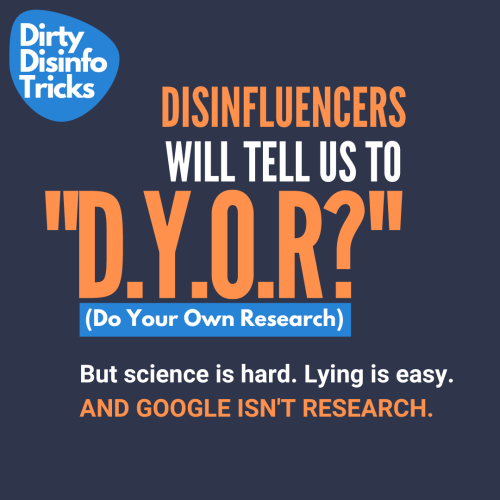
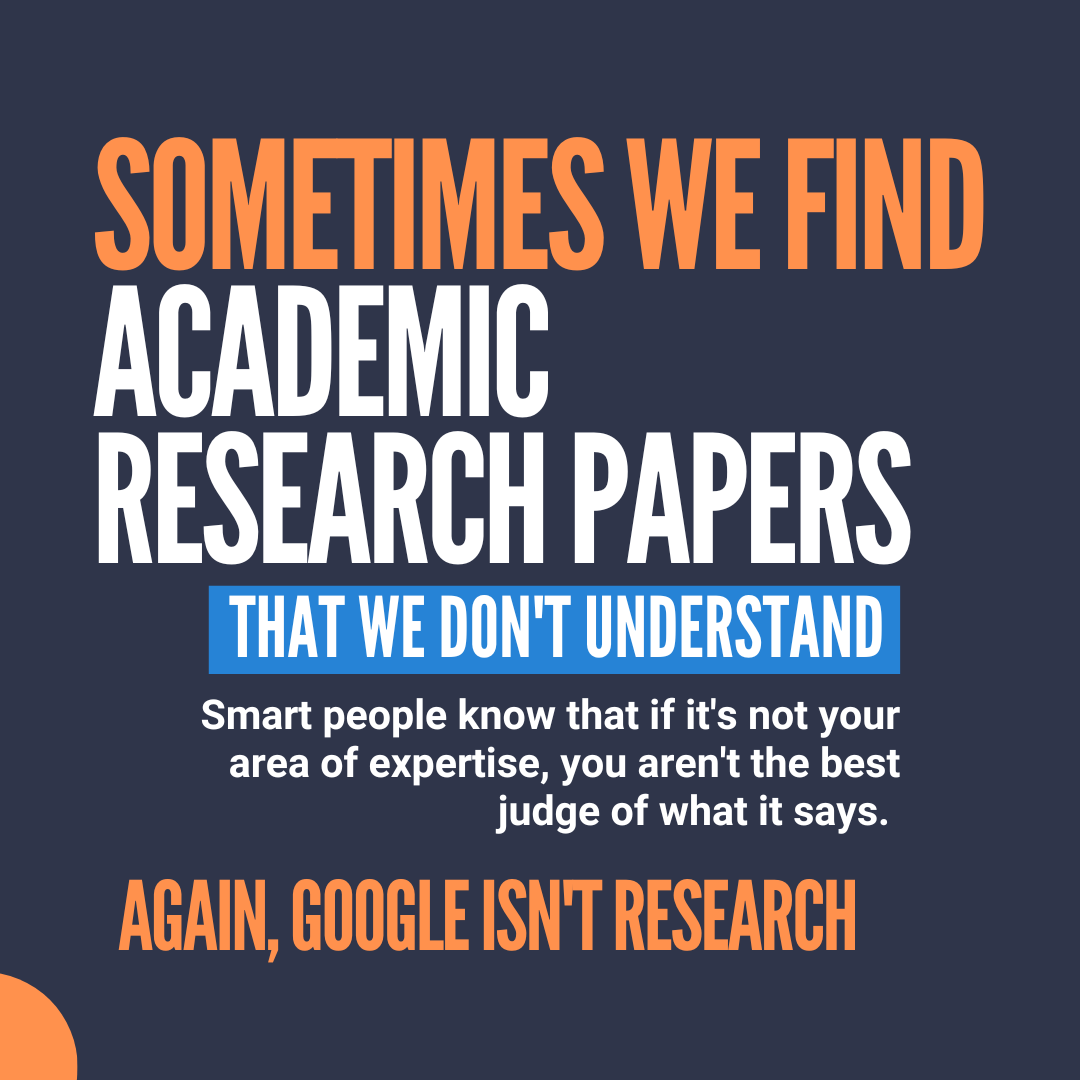
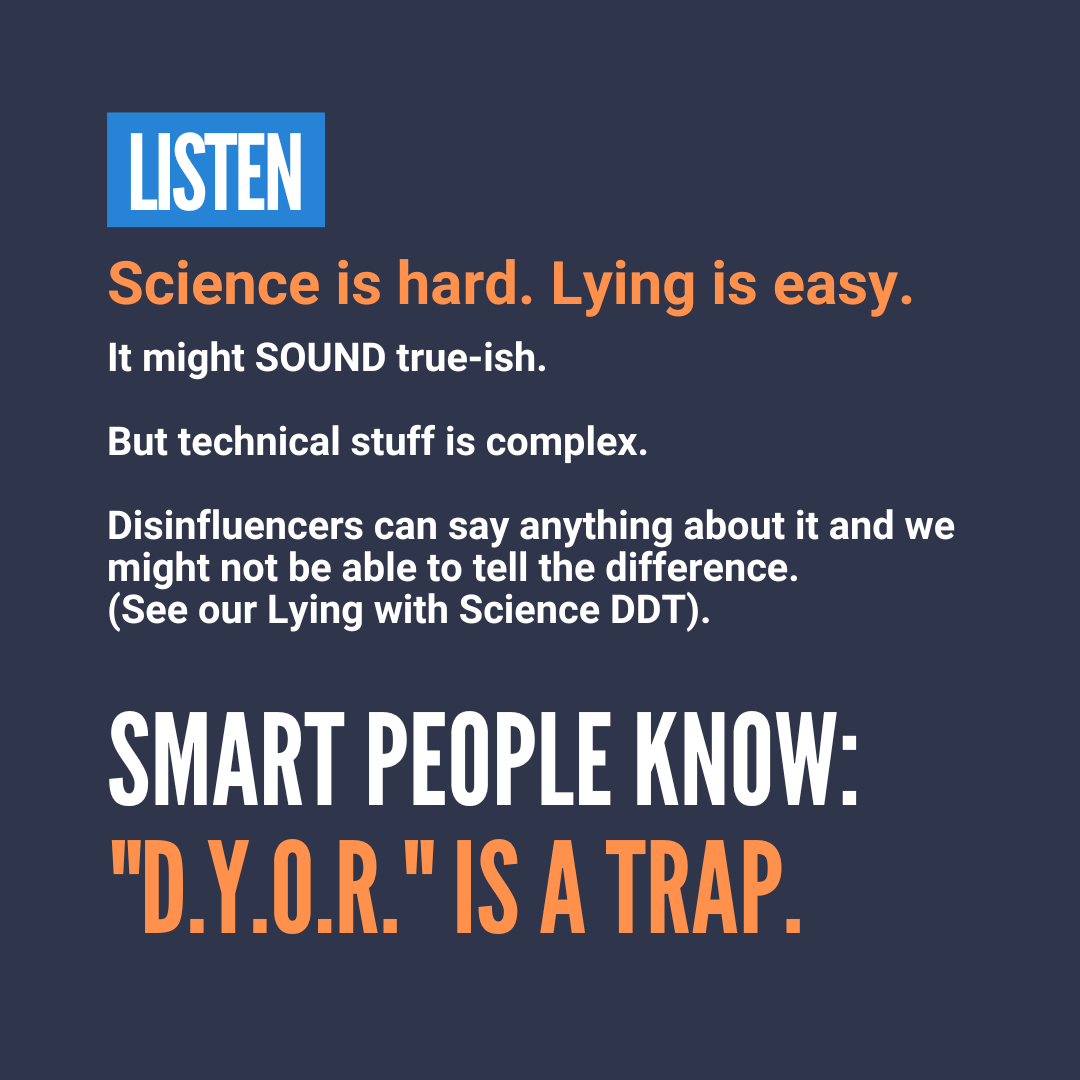
When we’re skeptical, people may say “do your own research.” That sounds like the right thing to do. But technical info is tough to understand. Whenever things are hard to understand, they’re easy to misinterpret or deliberately manipulate. So when we hear “do your own research” (D.Y.O.R.), we know it’s not that simple. In fact, it can be a trap.
“Do your own research” flatters us into believing disinformation
Disinfluencers and conspiracy theorists have been telling us to D.Y.O.R. for a long time, but QAnon and COVID-19 helped it become a major weapon of disinformation.
In situations where information is uncertain and changing rapidly, we’re right to be skeptical about things. Disinfluencers are turning that against us.
Why they tell us to do your own research
- It sounds like they’ve done the research. We think they must be smart, in the know, and legit. They wouldn’t tell us to D.Y.O.R. unless they knew it was true, right?
- It’s flattering. They’re saying we’re smart enough to figure it out, like they did. We’re one of the cool kids.
- They know we probably won’t bother. We’re busy. We don’t care that much. We’ll just take their word for it.
- Most people don’t “research,” they Google-search. Google searches are a trap:
- Searching on odd topics – like magnetism and vaccines – brings up what people have written about it. Usually conspiracy theories. Legit researchers don’t research things there’s no reason to believe.
- After the lie gets enough attention, we may find fact-checks. (You should keep a list of a few fact-checking websites you trust. We like Reuters, USAToday, and Politifact)
- Or we WILL find serious research that is so technical and complicated that we have no idea what it says. But since those words are in it, we think our clever friend must be right, because they understood it (they didn’t).
- And what’s worse:
- Once you click on a single YouTube video or Google link, it will send you to more, increasingly extreme content.
- YouTube in particular allows a lot of false or misleading information on the platform, and recommends it to people.
- And even if we do attempt to research their topic, we’ll keep falling into THE TRAP. Chances are that we’ll use the same language they use in our searches, rather than how the experts describe it. Using their language keeps them in control of what pops up. They know we’ll just read the first few Google results or watch the first few YouTube videos. Trapped again. Because they know we’ll think – if they lied to me about this, what else are they lying about?
How the do-your-own-research trap works
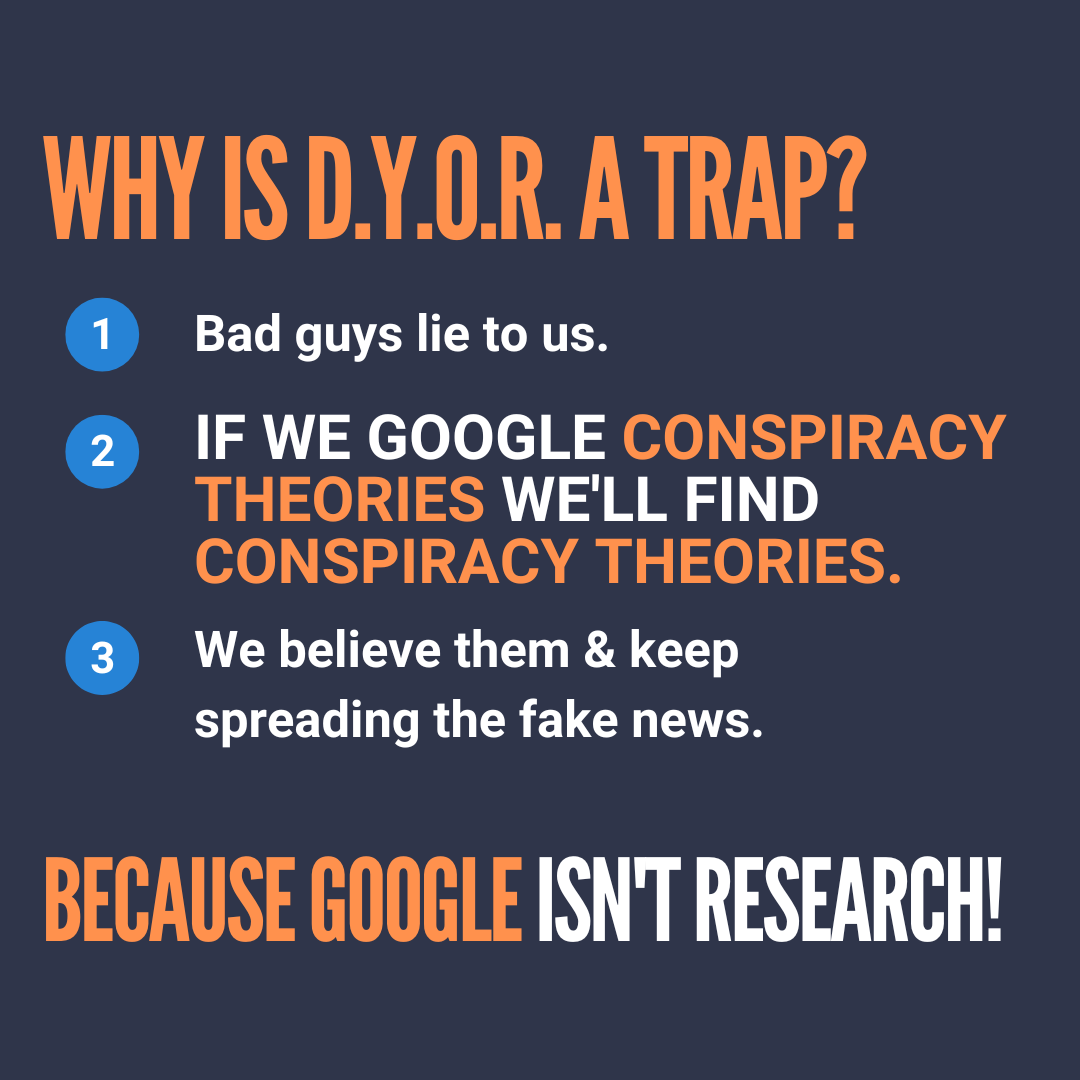
D.Y.O.R. traps are vicious cycles:
- A disinfluencer tells us to D.Y.O.R.
- We do an online search using the same words that they do in their argument.
- They already know what will pop up. We don’t. They point us in a direction that THEY want us to go using THEIR language because they know we probably won’t search more using different words.
- The things we find are full of disinformation. Or, they’re legit articles but we can’t read them. Technical language is complex, and unless we’re experts, we likely won’t be able to understand the full context. For more info on the use of jargon in science, check out our Lying with Science DDT.
- Because research is hard, we wind up going back to the things we can understand. Or just taking the bad guys’ word for it. At the very least, we start to doubt what we thought we knew or what we thought made sense.
- Once that happens, we start spreading the doubt, telling others to D.Y.O.R.
An example of a do-your-own-research bad actor
An example of this is from an Instagram account called doyourownresearchllc.
D.Y.O.R. is literally their name, and they even have a store selling D.Y.O.R. merch.
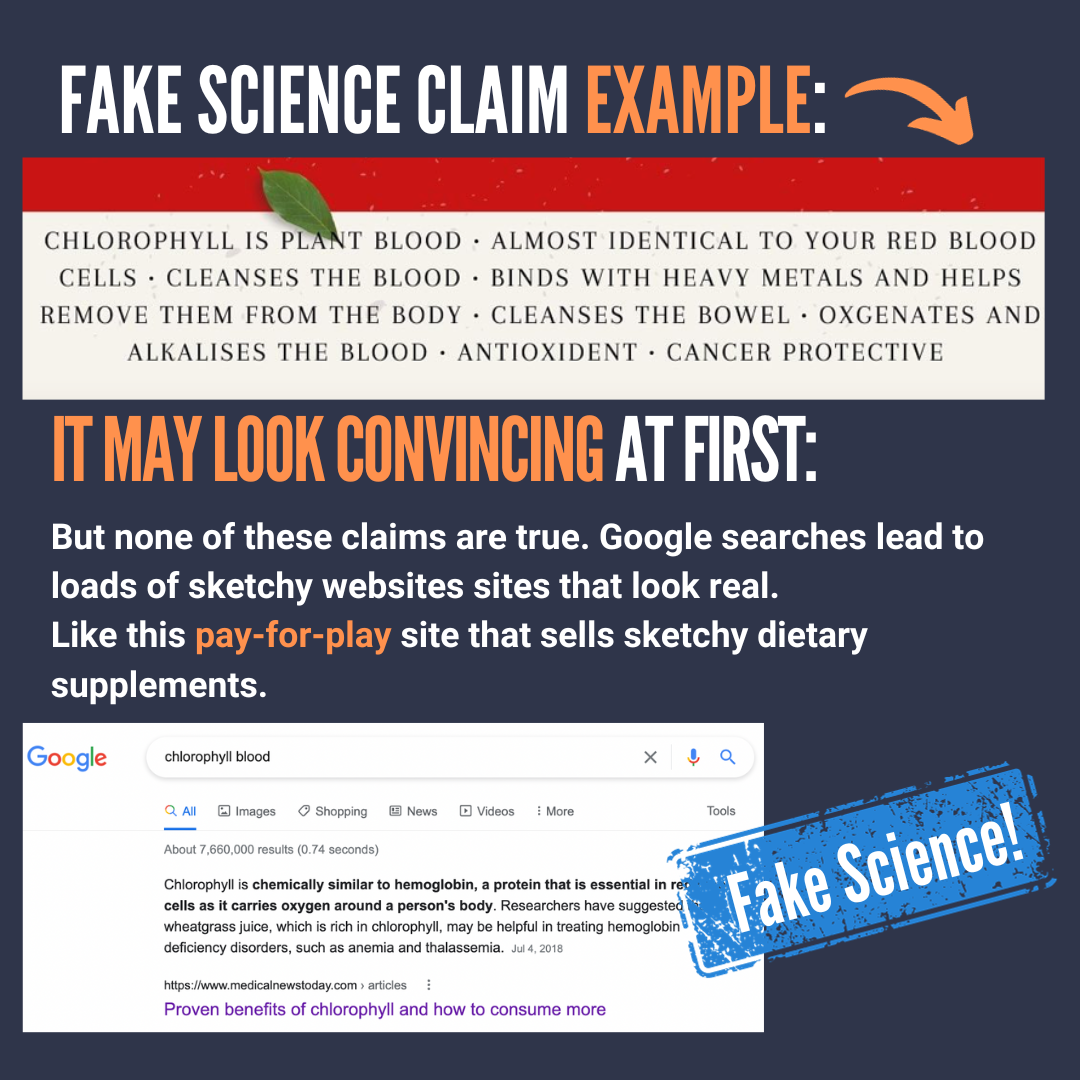
At first glance, it isn’t really clear what people are supposed to D.Y.O.R. about. They seem to exist to sell logo hoodies and preach to their followers that “research is a gateway to the truth.” But one post lists “educational tips” on chlorophyll.
And at first, it sounds kind of believable. The post looks professional and they use words like “educational” and “organic”.
And because we ARE researchers, we dug around to figure out what the 411 was on these claims. And it was exactly as we expected.
A quick search showed a ton of dubious “health” websites that have serious credibility issues right alongside reputable ones on the first page.
When we did come across some reputable sites, we found that chlorophyll has some great benefits (yay, kale! I see you, broccoli!), but not all of them were entirely as claimed. We also found that reputable sites’ legitimacy only extended to actual science, not alternative trends like chlorophyll pills or drops. The liquid and capsule chlorophyll trend that’s sweeping social media sites like TikTok makes claims that have been unproven and untested. And a supposedly reputable site was even featured on the Associated Press’ website. But upon further examination, even that was “paid content” from another site.
And take a look at the below image. The ads clearly show supplements, not gorgeous greenery like spinach. The word “claimed” gets lost in the heading, “what are the claimed health benefits of chlorophyll?’ That’s followed by a link to the Cleveland Clinic! But when you click that link, the paragraph AFTER the list is a bit more skeptical. The question is, how many people follow through and click that link after searching?
The point is, if we don’t know how to do research, any one of those things could’ve pointed us in a dubious direction. Bad guys use a ton of tech tricks to manipulate search results so that crappy content floats to the top. Or, they point us to info that sounds legit but has nothing to do with the topic. Or to those that are less than legit. We often use their language to do web searches, so what we find is dependent on what they say. We go down rabbit holes of information on search engines or social media sites.
Conclusion
Our gut reaction is to just suck it up and believe the D.Y.O.R. guys. Because a lot of us don’t know much about chlorophyll, what pops up sounds like it could be true. But science and technology are complex fields. It’s just easier to let them tell us what’s out there. What doyourownresearchllc put out there is, at a minimum, misleading.
The bad news is that a lot of us get suckered into doing the work for the bad guys without even realizing it. When we repeat the D.Y.O.R. motto, they’re banking on us not to do the research. Or if we do, not to understand it or to be overwhelmed with what’s out there. And after we’ve found what they want us to find a few times, we start to trust them. Which means they can say whatever they want.
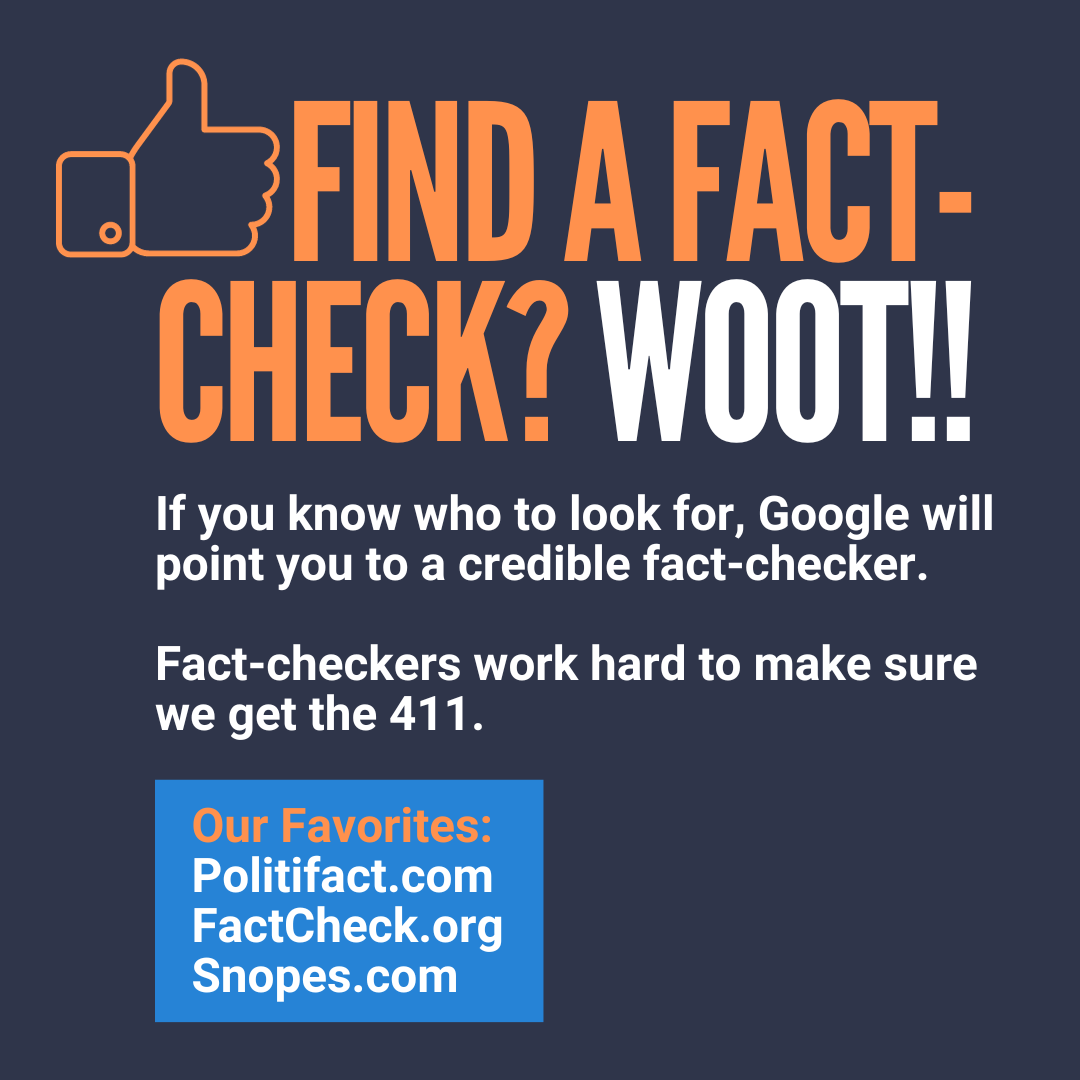
The good news is that fact-checkers are pretty dope. There are loads of fact-checking websites out there that exist just to debunk the disinfo and conspiracy theories floating around the interwebs. We can also look to see if the mainstream media has mentioned the topic. Despite the recent backlash to the MSM, they employ a ton of people just to make sure they don’t push out fake news. Because when they do, they have to tell us. And that harms them long-term. Look for legitimate outlets focused more on real news rather than opinion pieces. The Media Bias Chart is a great place to get an idea of where your favorite sources fall regarding legitimacy and bias. Finally, if there’s something you’re questioning, send it to us at Reality Team and let us do the hard work for you. Who knows, maybe we’ll even do a DDT on it!
Related Cards