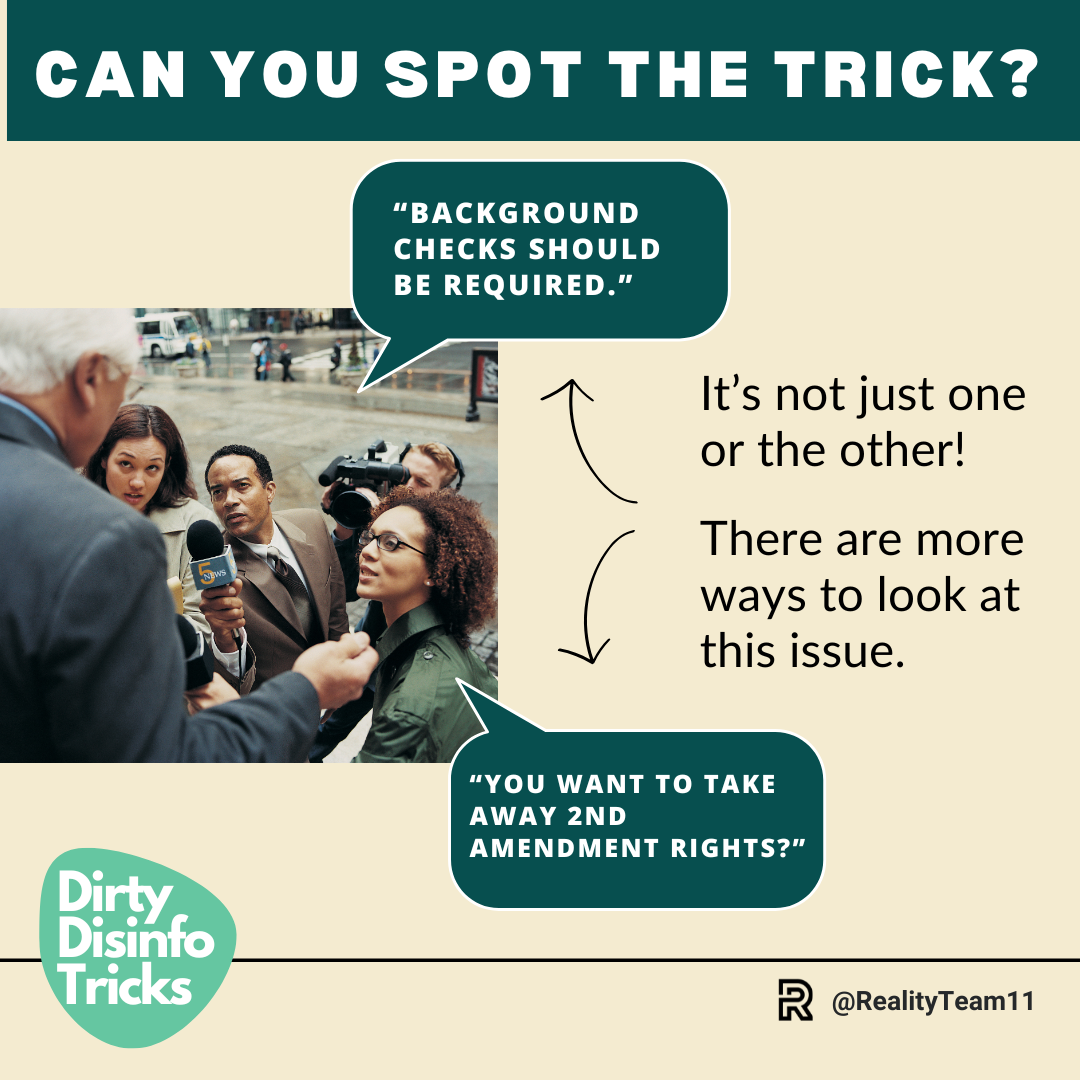
Bots

What is a Bot?
Bad guys use bots to manipulate the social algorithms and get themselves a lot of attention and visibility. They make something up, then make it seem like a movement.
A bot is short for robot. It’s an automated account that can do various things online. Not all bots are bad. Lots of companies use bots for customer service on their websites. They can let us know when there’s an earthquake somewhere in the world (twitter.com/earthquakeBot) or get daily photos of our universe from NASA (twitter.com/DailyNASA). Bots do things like post, share, comment, and DM people online. Just like us.

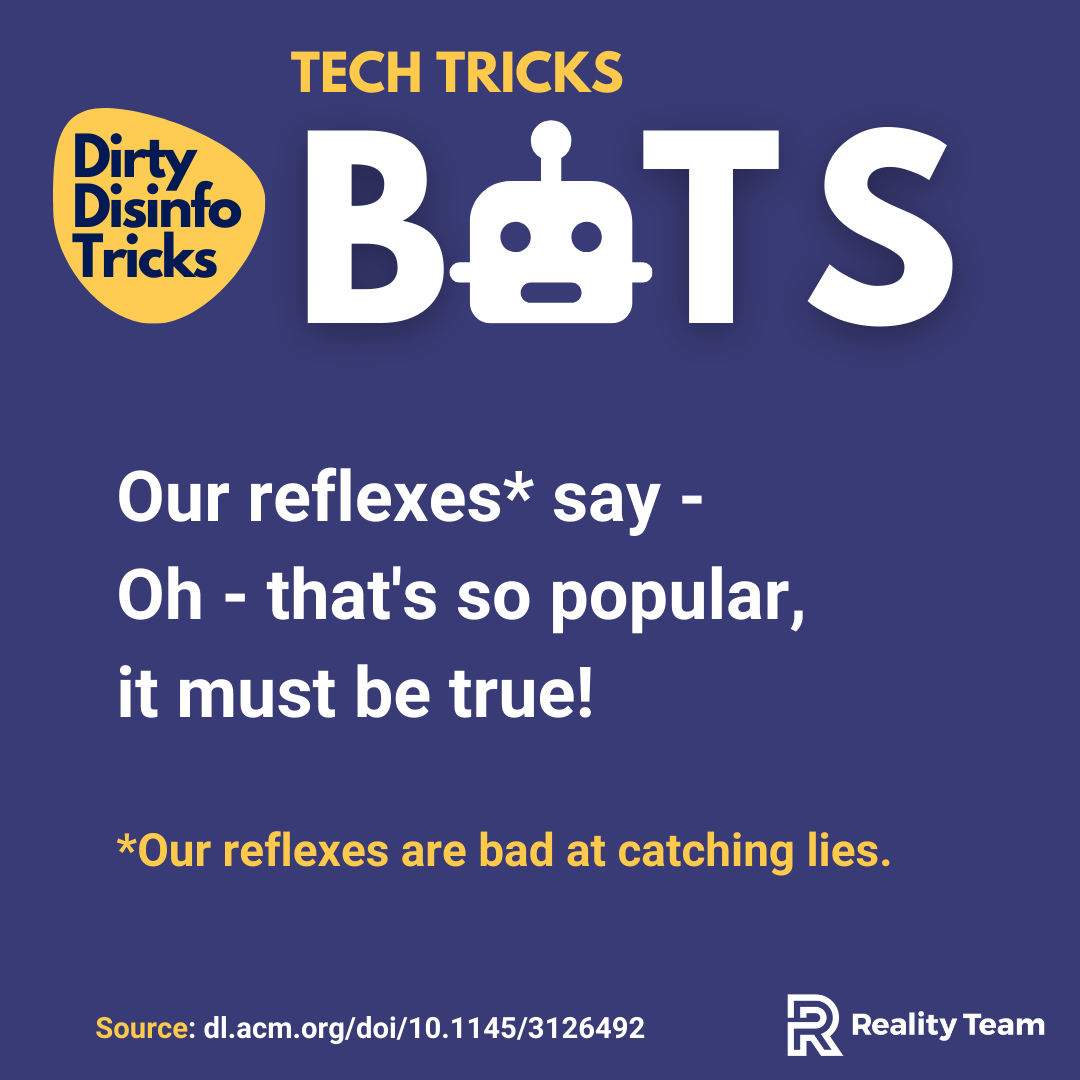
But not all bots are run by the good guys. Manipulators use them to make extreme opinions or lies look popular and mainstream. They often share posts from each other. This makes the topics seem super popular and sharable. When things are popular and shared by a lot of people it seems convincing to us.
Bad bots are good at distorting reality by being the loudest person in the room. They draw attention to controversial issues by sharing disinformation or “shitposting.” Shitposting is when people share things that deliberately upset us or distract from the main conversation.
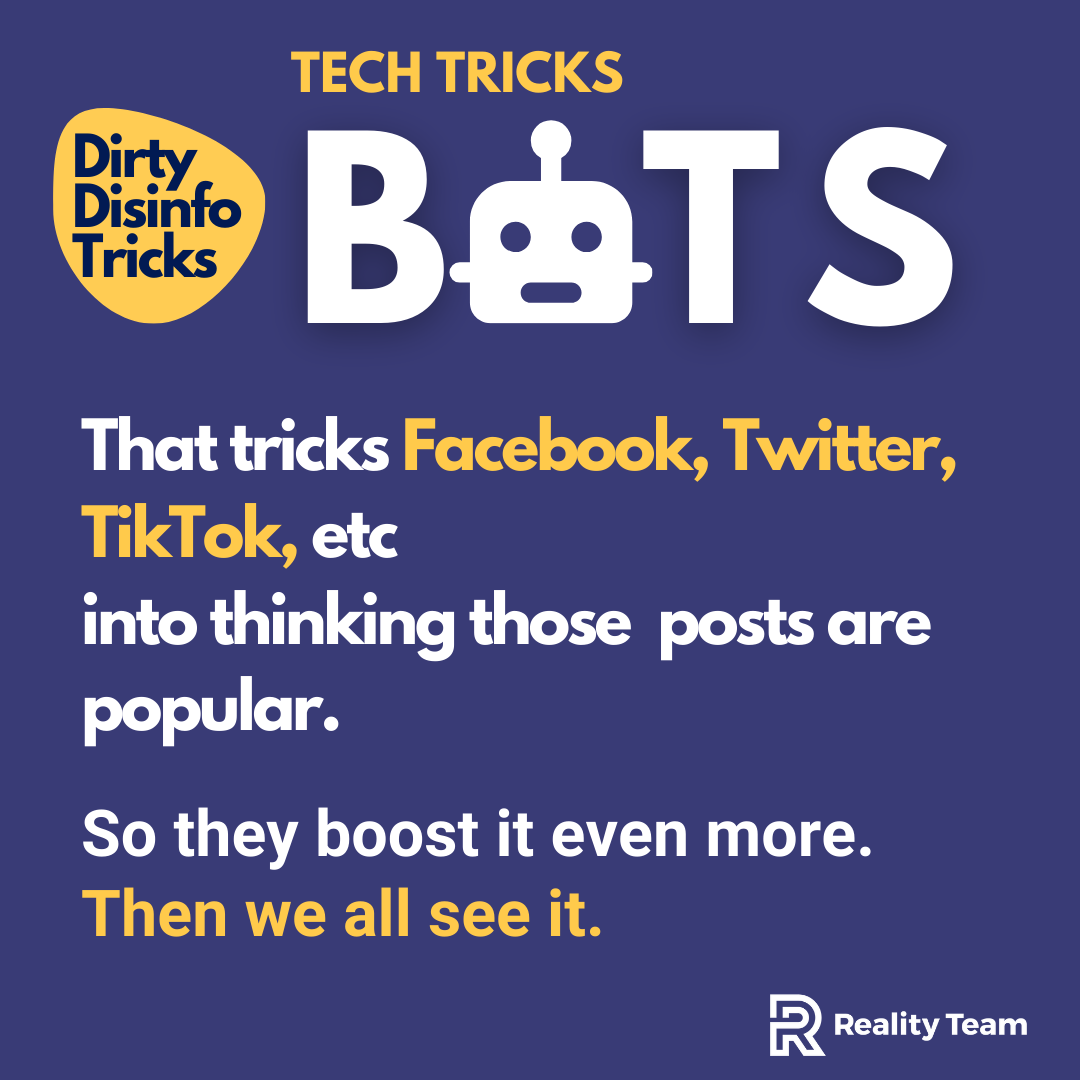
Bots are invasive. In 2020, researchers discovered 82% of the top 50 influential COVID-19 retweeters, and 62% of the top 1,000 retweeters, were bots. This means that most of us have seen, shared, or interacted with a bot in some way. Another study found that Twitter had an estimated 23 million bots, Facebook had 140 million, and Instagram had 27 million. That’s an estimated 190 million bots just on those three platforms.
Elections around the world are a popular bot target. During the 2020 U.S. election, one company found 13,775 Facebook profiles that posted more than 50,000 times in ONE WEEK! Many bots come from humans working in foreign bot farms. They work 24 hours a day setting up fake accounts and automating responses. They want us to argue with each other. They want to divide us on controversial topics. They want us at each other’s throats so we don’t pay attention to what else is happening in the world. They’re very good at this.
How to Spot a Bot
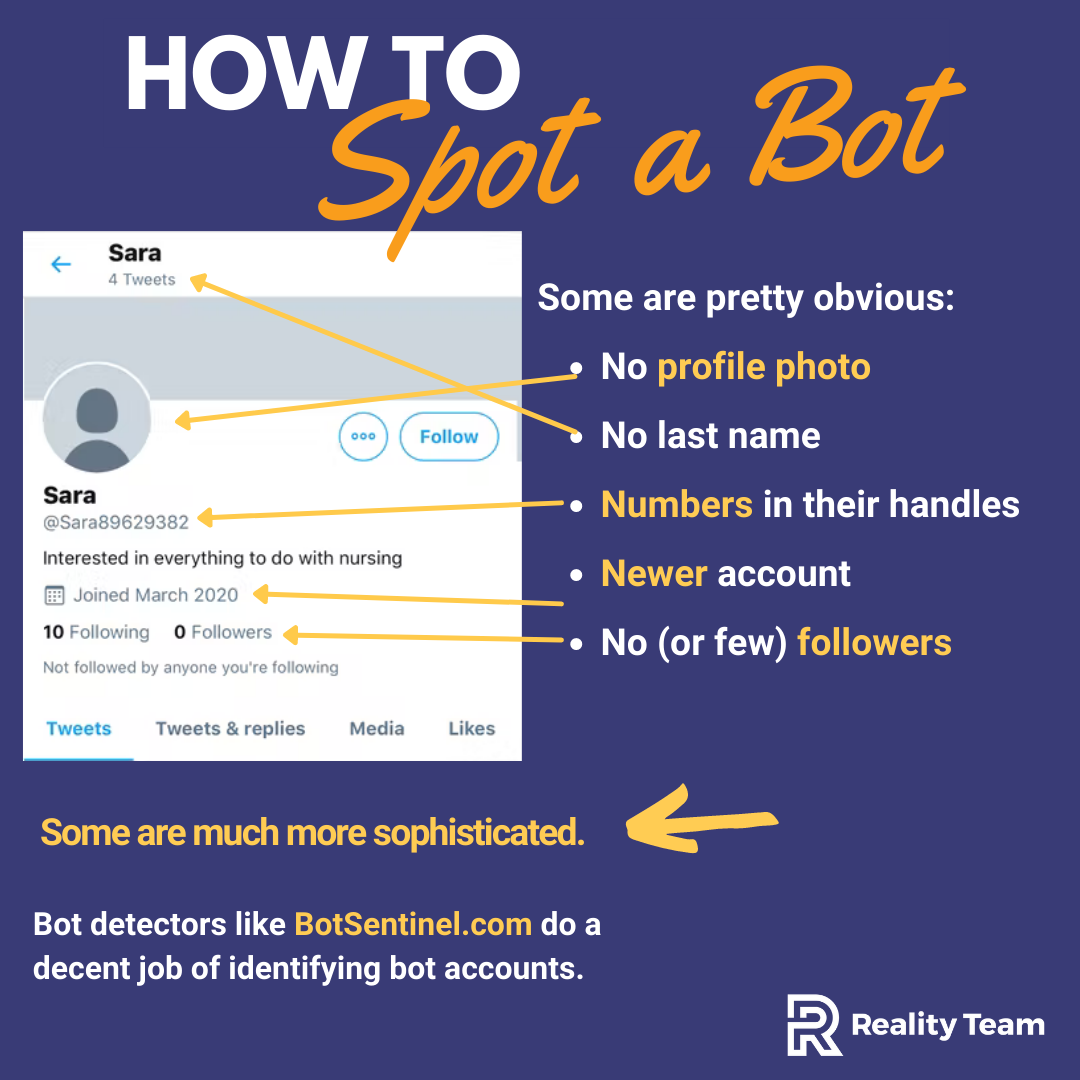
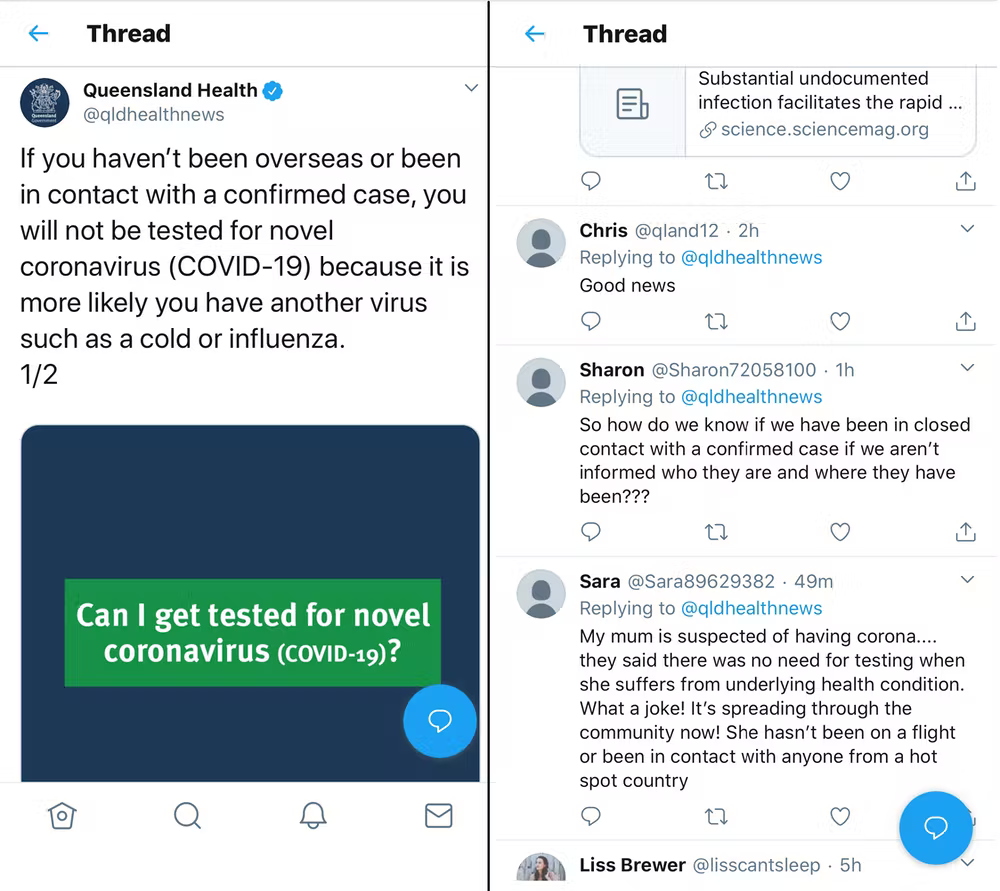
Bots can be very hard to detect, especially ones with a large number of followers. While some bots are very sophisticated, there are some signs that we can look for when we encounter a suspicious page. If you suspect an account may not be real, visit Bot Sentinel or get the Twitter API Botometer.
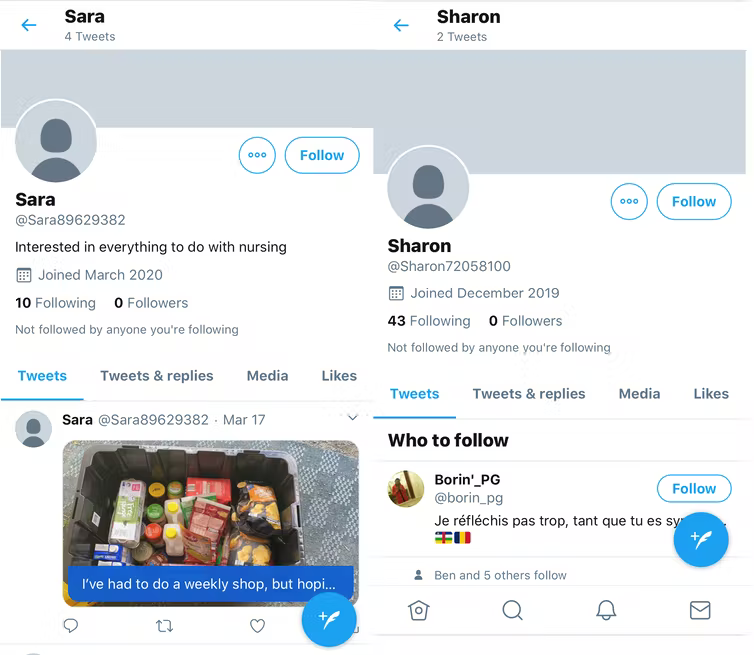
- No profile photos (or a generic image)
- No (or few) followers
- A location that doesn’t seem to match their posts
- Newer account
- No last name
- Numbers in their handles
- Only a few posts
- Their posts are focused on controversial topics or try to pick a fight
- They follow news, government, or influential users in a certain topic
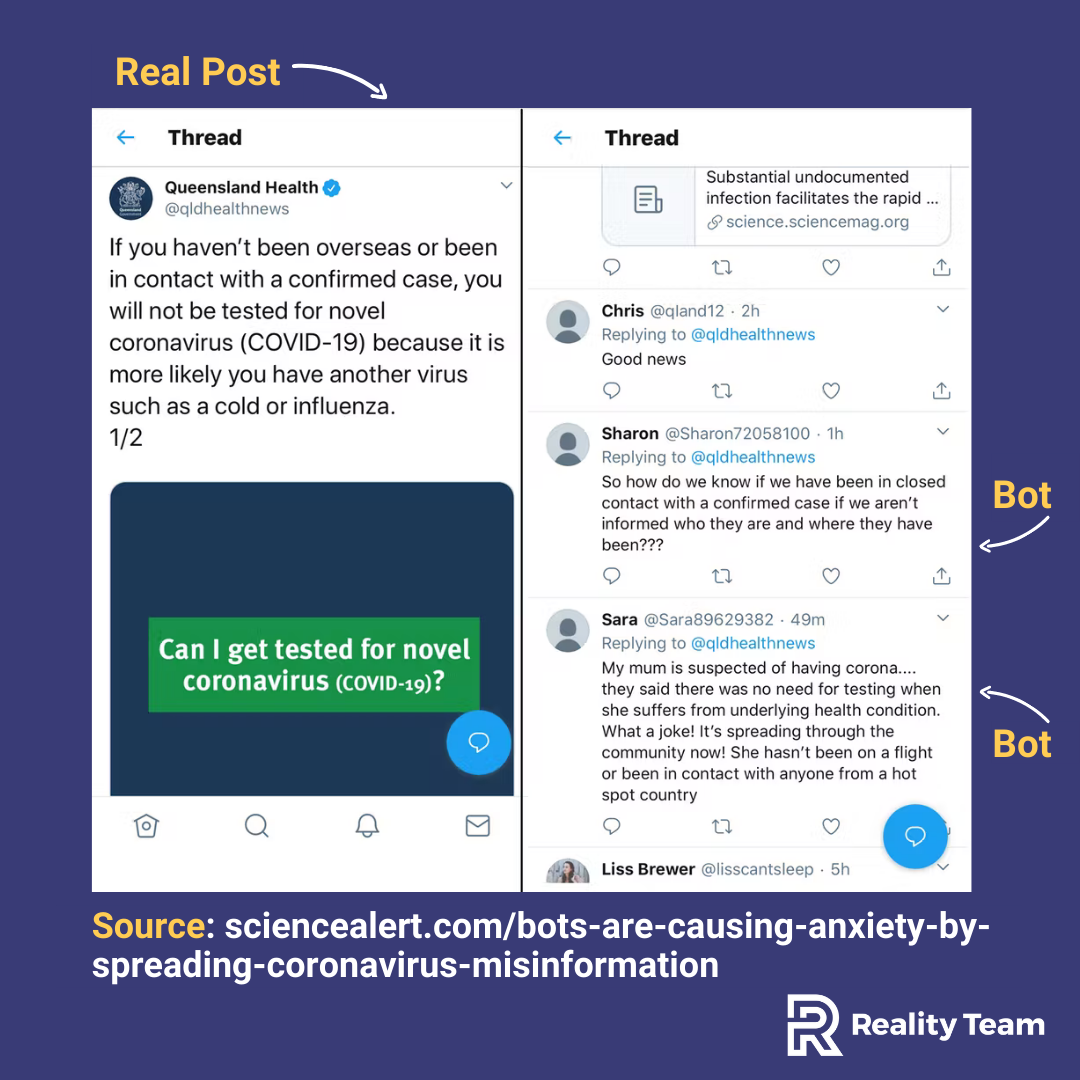
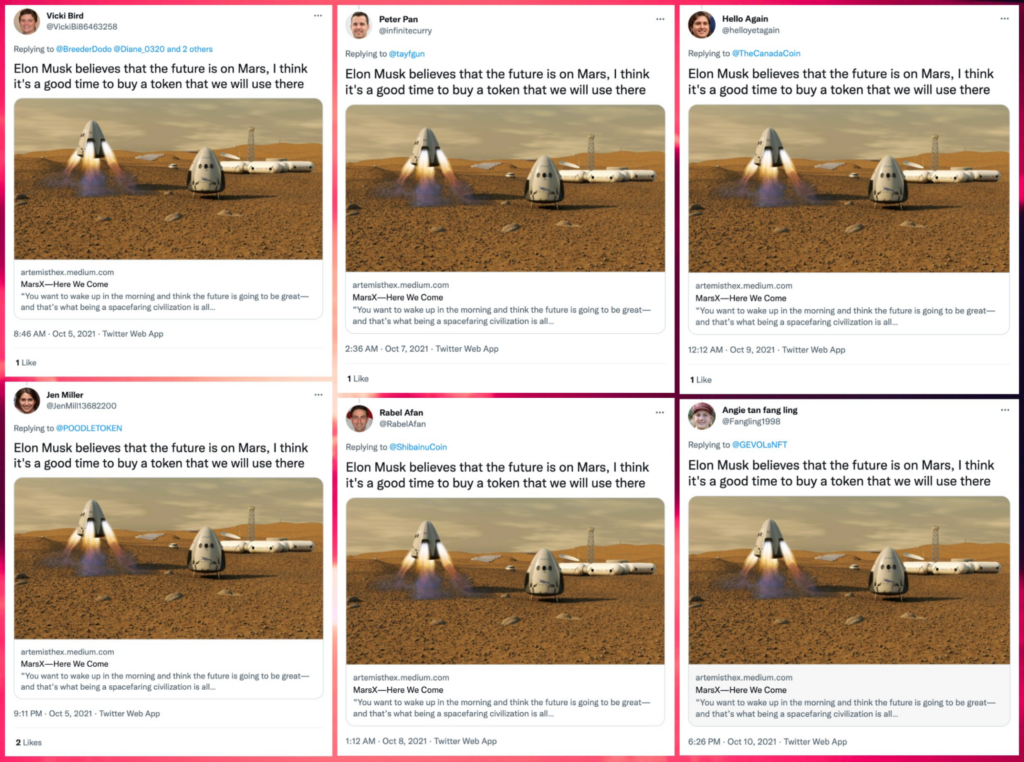
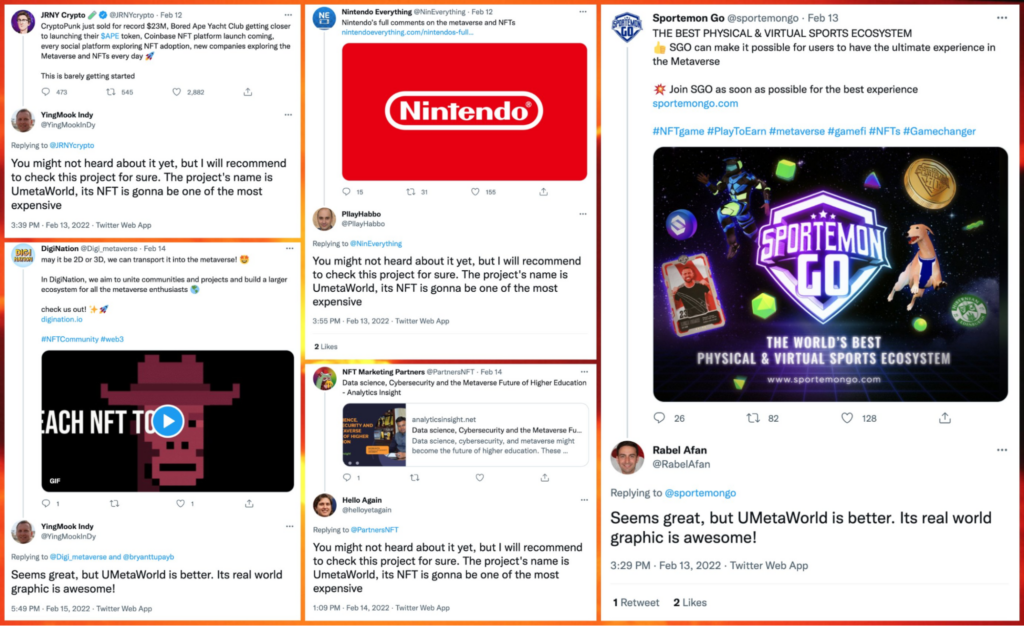
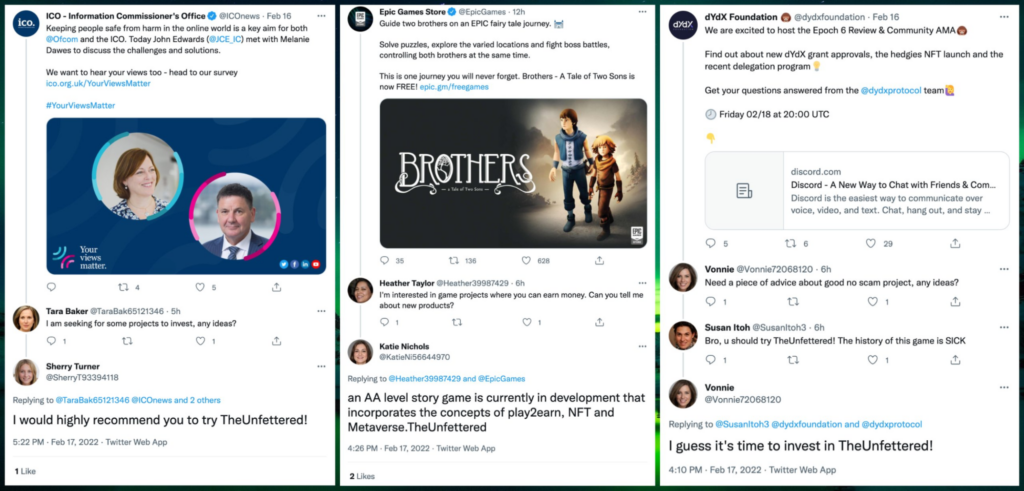
When it looks like so many people support something, it can manipulate you into thinking that you should support it too.
Knight Foundation: The evolution of computational propaganda: Bots, influencers, and platform
responsibility
Comparitech: Inside a Facebook bot farm that pumps out 200k+ political posts per month
DW: Fact check: How do I spot fake social media accounts, bots and trolls?
Communications of the ACM: Is That Social Bot Behaving Unethically? (version 1) and Is that social bot behaving unethically? (version 2)
Science Alert: Social Media Is Full of Bots Spreading COVID-19 Anxiety. Don’t Fall For It
Center for Information Technology & Society: How is Fake News Spread? Bots, People like You, Trolls, and Microtargeting
Related Cards