COVID? Why So Many Variants?
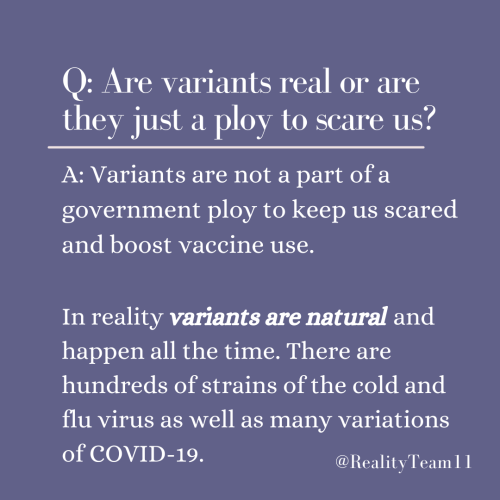
Are variants even real?
It feels like COVID variants keep popping up like weeds. Just when we think we’re out, a tougher strain pulls us back in.
Will the vaccine work for this one? Are the symptoms worse? Spread? Do I need to cancel another vacation?
Bad actors have been using our fears and doubts to spread disinformation. They claim these variants are “proof” the virus was man-made. “Proof” that the government is lying about COVID-19. Proof that this was all made up to control us. This is NOT the case.
The truth is simpler than some large scale conspiracy. Variants of viruses happen all the time.
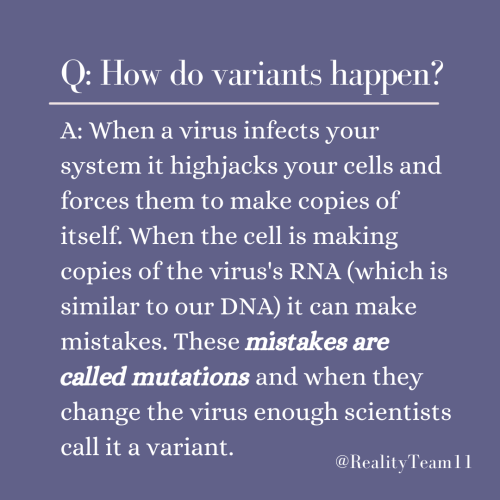
How do variants happen?
When a virus infects your system it hijacks your cells, It uses your cells to make copies of itself and its genetic code (Viral RNA). During the copying process little mistakes happen. Scientists call these mistakes mutations. These mutations are random. They are part of the lifecycle of all viruses and bacteria (and animals too – but it’s more complicated).
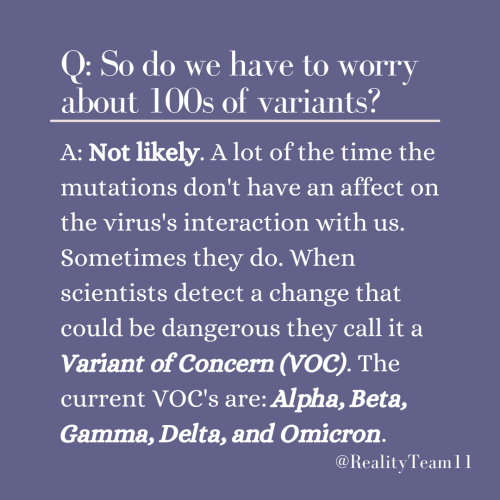
So do we have hundreds of variants to worry about?
Sometimes the change is too small to matter. It has no effect on how the virus functions or interacts with us… other times it does. When the changes affect humans, scientists call these variants of interest (VOI) or variants of concern (VOC). Right now the VOCs of COVID-19 are:
- Alpha
- Beta
- Gamma
- Delta
- Omicron
Scientists are able to see exactly what part of the RNA has changed, which helps them to figure out if the vaccines will be effective against them or not.
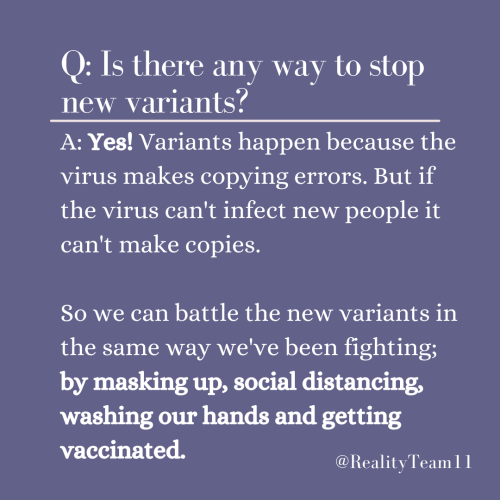
How do we stop new variants? Stop the spread!
We can cut variants by stopping the virus from making copies of itself. That means we need to make it harder to infect people. Even mild cases give the virus lots of time to copy itself.
If the virus can’t infect new people, it can’t mutate into new variants.
That means we need masks that make it harder for the virus to spread from one person to another.
And, we need as many people as possible to get vaccinated and boosted so they’re harder to infect.
WHO: Tracking SARS-CoV-2 variants
WebMD: Variants of Coronavirus
NBC News: How variants like omicron develop and what makes them variants ‘of concern’
Centers for Disease Control and Prevention: Vaccinations > Variants
Related Cards