Is vaccine access fair and equitable?
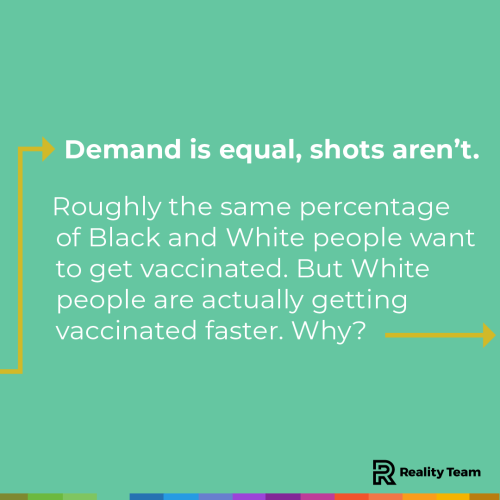

Demand is equal, shots aren’t:
Roughly the same percentage of Black and White people want to get vaccinated. But White people are actually getting vaccinated faster. Why?
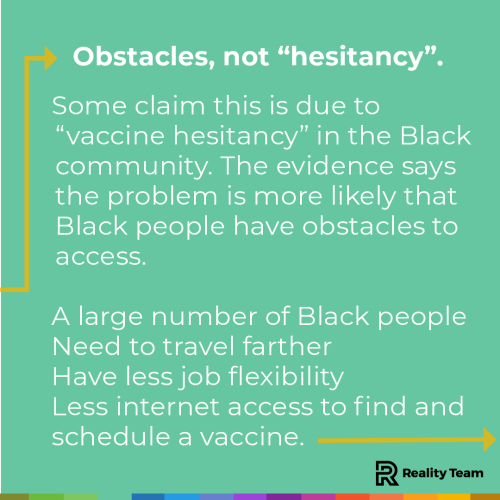
Obstacles, not “hesitancy”
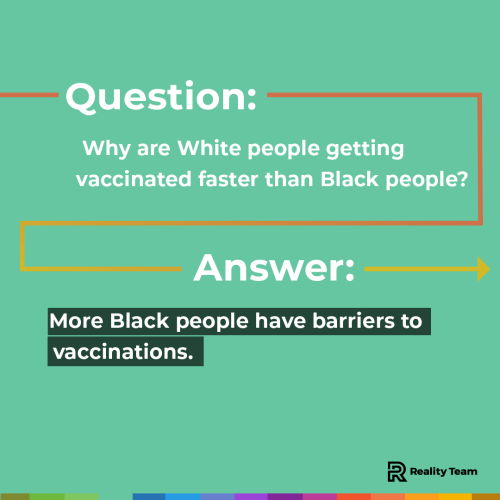
Some claim this is due to “vaccine hesitancy” in the Black community. The evidence says the problem is more likely that Black people have obstacles to access.
What kind of obstacles make it harder to get a shot?
- More travel time: An NPR analysis found that some states have fewer vaccine centers near Black and Hispanic communities, so it takes Black people more time and effort to get there.
- Less Job Flexibility: Black people are more likely to hold essential worker jobs, which do not allow time off to get the shot or take time off if they feel lousy the next day.
- Less Internet Access: Most vaccine registration and appointment scheduling is available primarily online. These systems vary by state and by county. Many are very confusing to use. Some determined people are using Facebook groups, twitter bots and all kinds of clever ways to hunt down vaccine appointments. People of color and people in rural areas are less likely to have reliable internet service, or internet access during work hours. They have a harder time getting vaccine appointments.
Takeaway
Differences in vaccination rates between White and Black people are probably due to in access issues.
Center for Disease Control and Prevention. Demographic Characteristics of People Receiving COVID-19 Vaccinations in the United States.
KFF. Latest Data on COVID-19 Vaccinations Race/Ethnicity.
FiveThirtyEight. The Reason Black Americans Are Getting Vaccinated At a Much Slower Rate Is Not Because They’re Reluctant.
Economic Policy Institute. Black workers face two of the most lethal preexisting conditions for coronavirus—racism and economic inequality
Religion News: Black Protestants aren’t least likely to get a vaccine; white evangelicals are)
Related Cards