
Clean Energy Means Jobs for America
Clean energy means jobs for Americans
More than 3 million Americans have clean energy jobs. They earn 25% more than the national median wage. There are more American clean energy workers than Retail Salespeople, Registered Nurses or Truck Drivers. Investing in a cleaner economy would mean even more rapid job and wage growth in all 50 states – and would help reduce the number of climate-related disasters we experience in the future.
The Risks: Natural disasters become much worse
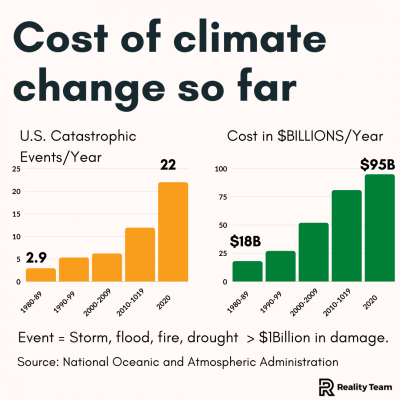
Recent science from the United Nations shows the time is now.
Every year we have suffered more climate-driven natural disasters like drought, storms, floods and fires. They are costing more money ($95 BILLION in 2020) and taking more lives than ever before. Chances are you may know someone who has experienced one. In the coming decades, the United States is on track to lose shoreline, roads, sewage systems, crops and many regions will become too hot, too dry or too flooded to live or work.
The Good News: WE CAN FIX THIS!
The technology to shift us to clean energy is commercially available today.
The U.S. Department of Energy reports that using only commercially available technology, the U.S. could shift to 95% clean electricity by 2035.
- We can take control and responsibility.
- We can compete with China.
- We can lead the world toward climate solutions.
In 3 seconds, you can help:
SHARE this info with friends and family.
The more people who get it, the faster it will get done.
Have 5 minutes? Make sure you vote.
Vote.org is a non-partisan website that will give you information on when and where to register and vote.
Worried you’ll forget?
The Environmental Voter Project invites people of all parties to pledge to vote.
They’ll send you a reminder when it’s time.
Take 10 minutes: Want to have a big impact in just a few minutes?
Tell your congressman that you support action on Clean Energy.
United Nations Intergovernmental Panel on Climate Change: Global warming of 1.5°C An IPCC Special Report on the impacts of global warming of 1.5°C.
E2: Build Back Better, Faster (2020)
The US Climate Alliance, 2020 Clean Energy Employment Report
Bureau of Labor Statistics: Occupational Employment
U.S. Department of Energy, National Renewable Energy Laboratory (NREL) Renewable Electricity Futures Study
NOAA: 2020 U.S. billion-dollar weather and climate disasters in historical context
Related Cards


