
Can government action solve climate change?
The good news: Most people are concerned about climate change. In fact, 67% of Americans believe that it’s a serious problem.
The bad news: A lot of people are worried that there’s nothing we can do to stop it. Psychologists have even coined a term for it; eco-anxiety. They also estimate that three-quarters of Americans suffer from it.
Even better news: We’ve tackled major environmental issues in the past and if we give it time, we can limit climate change too.
Can government action work on a huge issue like climate change?
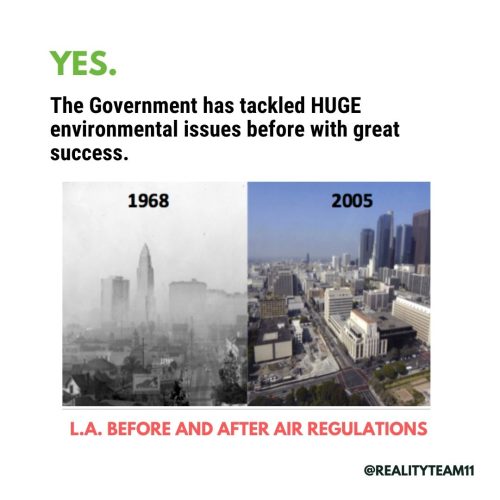
The answer is yes. The government has tackled big environmental issues in the past and made huge advances for the better. In fact if it wasn’t for government intervention we’d still have a hole in our ozone layer, water that lights on fire, and air so thick with pollutants you could choke on it.
Remember when the air could kill you…
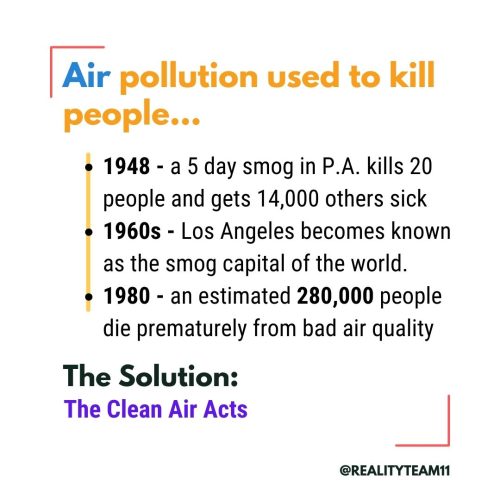
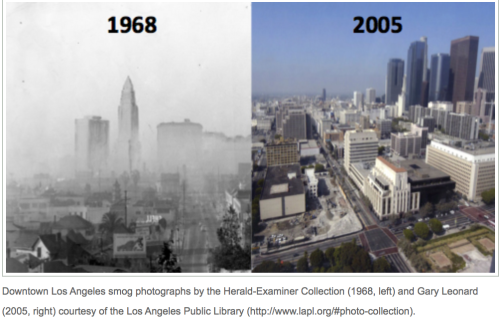
Industrial pollution in the air was having devastating consequences. In 1948 a lethal smog settled over Danora, Pennsylvania. It killed 20 people and caused respiratory and cardiovascular problems for 14,000 residents. Los Angeles was known as the smog capital of the world, and our other cities weren’t far behind.
The Solution:
The Clean Air Acts of 1963, 1970, and 1977
The Results:
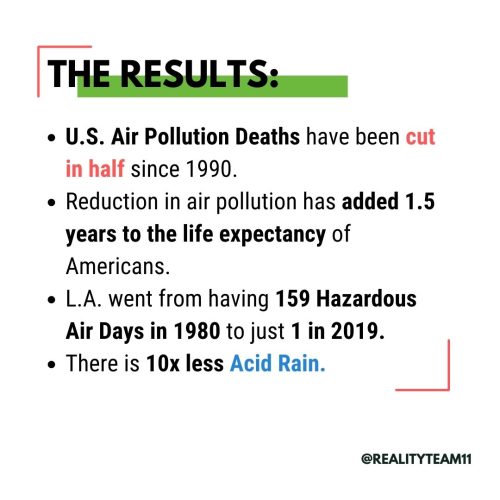
Thanks to The Clean Air Acts and other legislation, air quality in the US has vastly improved. Reductions in air pollution have added 1.5 years to the American life expectancy. U.S. air pollution deaths have been nearly cut in half since 1990. Los Angeles went from having 159 Very Unhealthy or Hazardous Air Days in 1980 to having just 1 in 2019. There is also 10x less acid rain than there used to be, which saved many of our forests.
L.A. before and after Air Regulations:
Remember when rivers used to light on fire…
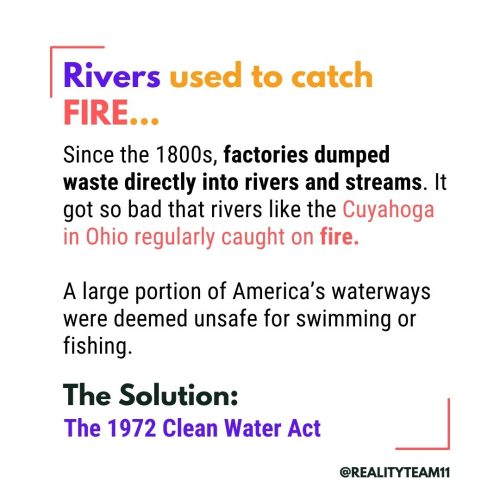
Since the 1800s, factories would dump waste directly into rivers and streams. It got so bad that rivers like the Cuyahoga River in Ohio regularly caught on fire and were completely devoid of any animal life. A large portion of America’s waterways were deemed unsafe for swimming or fishing.
The Solution:
The 1972 Clean Water Act.
The Results:
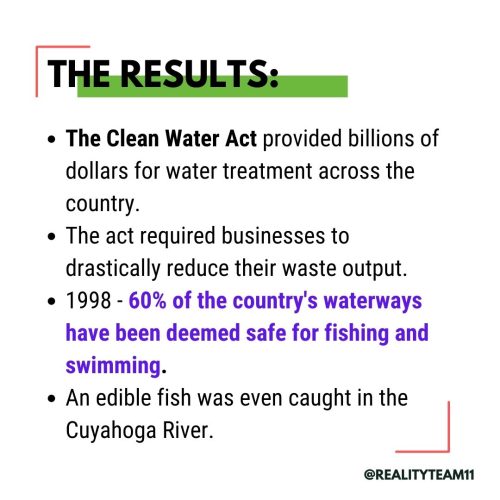
Water pollution levels have improved since the 1960s. The Clean Water Act has provided billions of dollars for water treatment across the country. They have also required businesses to drastically reduce their waste output. As of 1998, 60% of the country’s waterways have been deemed safe for fishing and swimming. In recent years an edible fish was even caught in the Cuyahoga River.
Remember that hole in the Ozone layer…
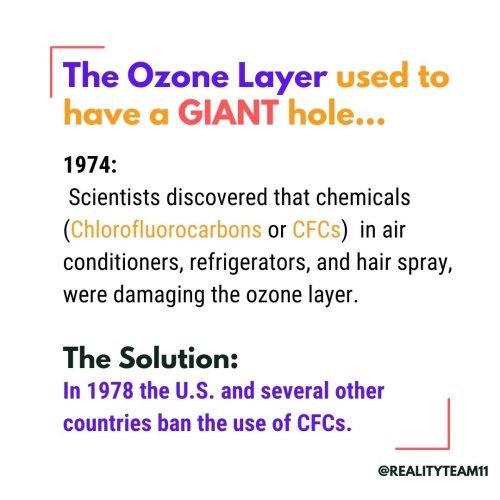
In 1974 American chemists discovered that certain chemicals called chlorofluorocarbons or CFCs were severely damaging to the earth’s ozone layer. This was a huge problem because back then we used CFCs in everything from air conditioners to refrigerators, and even hair spray.
The Solution:
The federal government investigated the problem and in 1978 the U.S. and several other countries banned the use of CFCs.
The Results:
The ban was really effective for two reasons:
- Countries that wanted to sell their products in the US had to stop using CFCs.
- It spurred an international effort to fix the ozone layer.
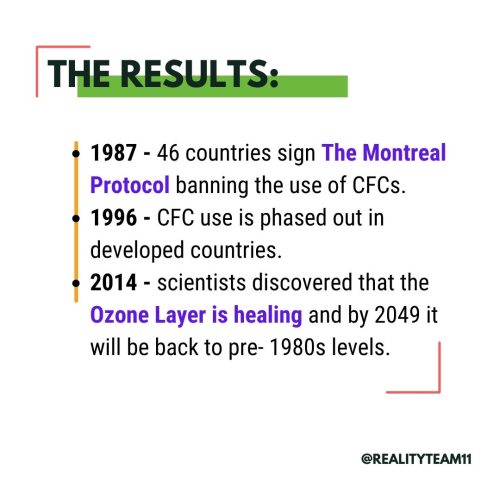
In 1987, 46 countries signed The Montreal Protocol. Thanks to the protocol, CFCs and other ozone harming chemicals are now globally banned. After several decades of phasing out these materials, scientists found that the ozone layer was healing and in 2014 they estimated that the damage to the ozone layer would be back to pre 1980s levels by 2049.
The Government and Clean Energy:
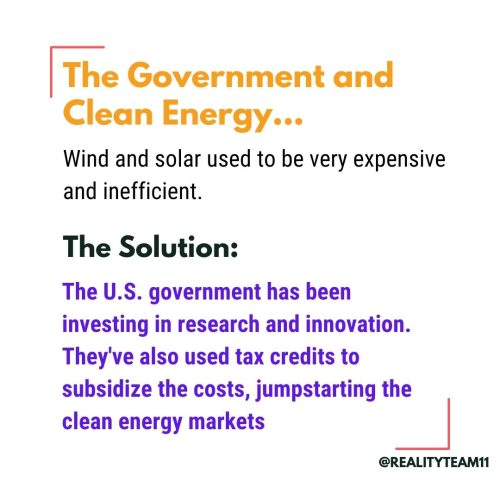
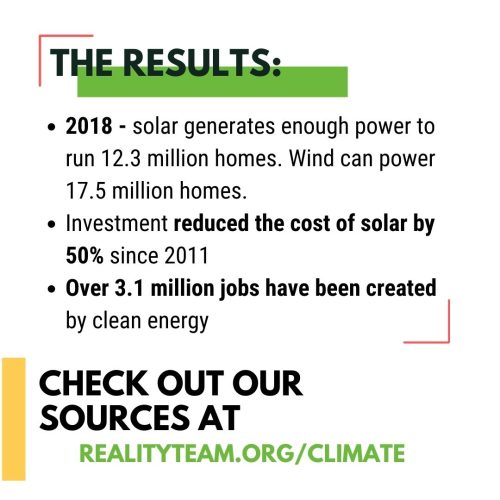
Clean energy used to be inefficient and expensive. In 2005 the Federal government began a tax credit program to jumpstart the solar energy market in the U.S. As of 2018 solar generates enough power to run 12.3 million homes. The subsidies reduced the cost of solar by 50% since 2011, making it significantly cheaper than even traditional fossil fuels.
The federal tax credit for wind also created a surge in the market. Wind can power about 17.5 million homes and is also a cheap renewable source of energy thanks to government investment.
There is also a secondary economic effect, the creation of jobs. To date over 3.1 million jobs have been created by clean energy, a lot of that owing to government investment.
So should the government tackle climate?
Absolutely. We’ve seen that when the government gets involved either through legislation, research, or investment good things happen. We currently have the technology to fix the climate crisis, so if the government does a few things to get companies, and cities and academics focused, we can totally do this – and bring the world along with us….
ThoughtCo.: The U.S. Government’s Role in Environmental Protection
EPA: Milestones in EPA and Environmental History
Pew Research Center: Two-Thirds of Americans Think Government Should Do More on Climate
UN Environment Programme: Ozone Timeline
Inc.: Clean Water Act
Columbia Climate School: How Much Do Renewables Actually Depend on Tax Breaks?
Department of Energy: Connect the Dots: Innovations in Residential Solar
NRDC: Fifty Years After 1969: How Far Have We Come?
The Independent: Nearly three-quarters of Americans suffer eco-anxiety
Los Angeles Almanac: Air Quality Days by Year, 1980 – 2019
The New York Times: Have We Passed the Acid Test?
Air Quality Life Index: United States: Clean Air Act (1970)
Related Cards


