Why do I need a COVID-19 booster?
It’s been a year since the COVID-19 vaccines were released. What many people hoped would be a “one and done” shot has likely turned into a series of boosters to keep your immunity up. We take a dive and answer some FAQs about the COVID-19 vaccines.
How does a vaccine even work?
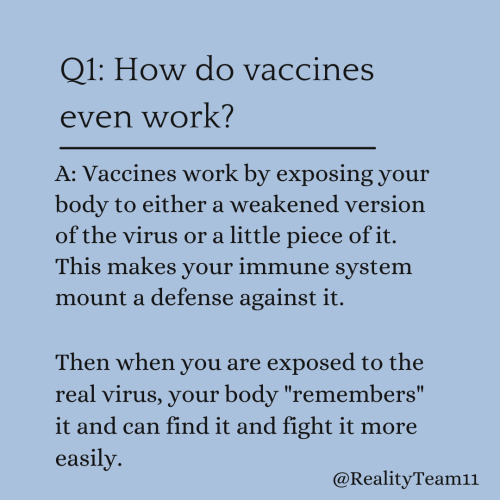
Vaccines work by stimulating your immune system and getting it ready to fight a virus.
An mRNA vaccine will tell your own cells to make a tiny non-dangerous part of the virus, which your immune system will immediately make B-cells and T-cells to fight against.
An adenovirus vaccine will expose your body to either a dead or weakened version of the virus, which will cause the same immune reaction.
With both vaccines your body has already created an army to fight the virus, so when it’s exposed to the strong live virus in the real world, your body is ready to fight it.
So why do I need a booster?
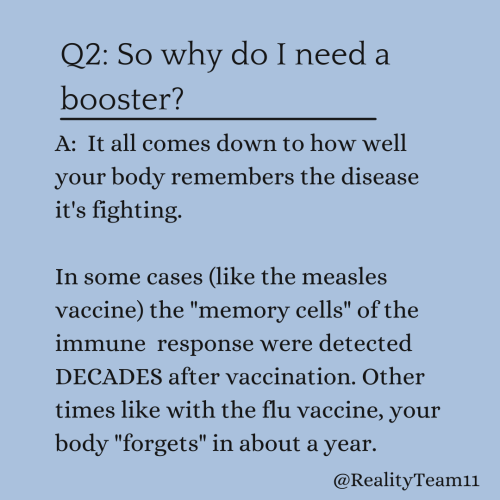
This has to do with the durability of your body’s immune response.
In some cases like with the HPV or measles vaccine, B-cells specifically created to attack those viruses have been found in people’s systems DECADES after getting vaccinated.
In other cases the immunity just doesn’t last that long. One example of this is the flu virus, where you need to get a booster every year because the levels of antibodies you created to fight the disease dwindle in just a few short months.
How long does immunity with the COVID vaccines last?
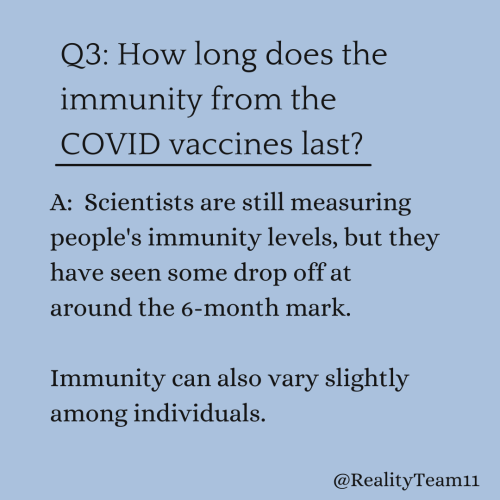
Scientists are still measuring people’s immunity levels, but they have seen some drop off in protection levels around the sixth month mark that vary between the three FDA approved vaccines. Immunity may also differ slightly between individuals.
If immunity from the vaccines drops off, why bother getting vaccinated, especially if I’ve had COVID?
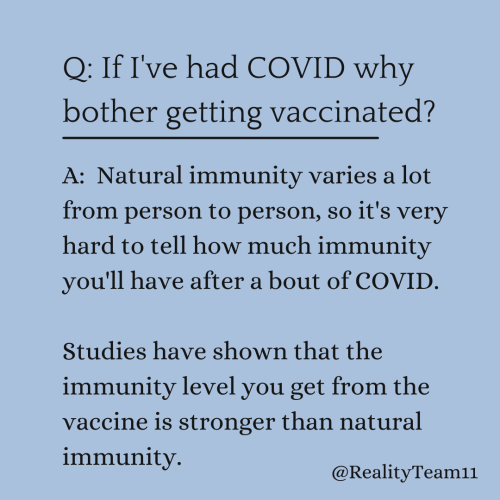
If you’ve had COVID you will have antibodies that will boost your immune response to the virus. However, natural immunity levels have varied a lot between individuals.
Studies have also shown that the immune response from vaccination is much stronger than a natural disease induced response.
That’s why the CDC recommends getting vaccinated even if you’ve had COVID.
Are we going to have to get a COVID shot every year?
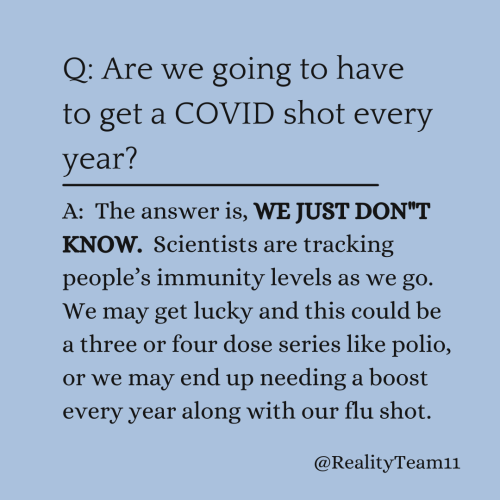
The answer is we just don’t know yet. Scientists are still trying to track people’s immunity levels and see how we respond to the initial doses and the booster. We may get lucky and this could be a three or four dose series like polio, or we may end up needing an annual boost every year along with our flu shot.
Yale Medicine: How Long Will Your Coronavirus Vaccination Last?
The Atlantic: What J&J Can Still Teach Us
Yale Medicine: COVID-19 Boosters: The Latest Advice
Related Cards