
What’s the deal with COP26?
What was COP26?
COP26 was the 26th annual meeting of countries to address climate change. The countries that have been attending since the 1994 UN summit on climate change are called “The Conference of Parties.” Sounds fancy. The focus of this year’s event was to keep and strengthen promises made during the Paris Agreement back in 2015 and to figure out how to keep global warming to only 1.5 degrees.
What did we agree to?
The full agreement is outlined in the Glasgow Climate Pact but it is DENSE. Here are some key takeaways that the U.S. agreed to and a few that we didn’t…
We agreed to:
- The US pledged an additional $8billion to help developing countries use clean energy.
- End deforestation (the use of forests for lumber and other goods) by 2030.
- Joined the “Just Energy Transition Partnership” to support South Africa’s transition to clean energy away from coal.
- To work with China to reduce our carbon emissions.
- Reduce our methane emissions by 30% by 2030.
Here are some parts of the pact we didn’t agree to:
- We refused to sign the pledge to phase out coal use in the 2030s but we did agree to “phase down” coal use.
- We did not agree to work toward all new car sales having zero net emissions by 2030.
Are there any consequences for breaking the agreement?
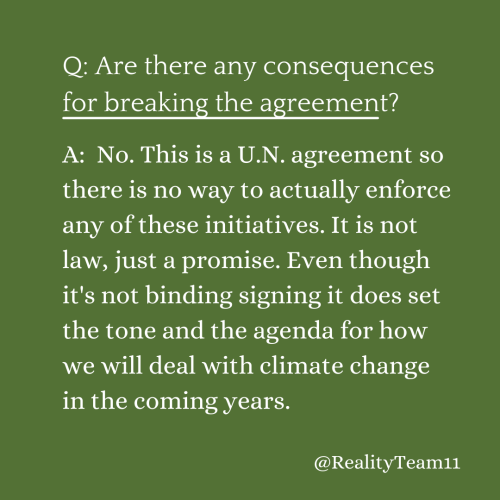
This is a U.N. agreement so there is no way to actually enforce any of these initiatives. It is not law, just a promise.
If it’s not a binding agreement why bother to sign it?
The Glasgow Climate Pact sets the tone and the agenda for how countries plan to tackle climate change.
Does an agreement like this override U.S. sovereignty?
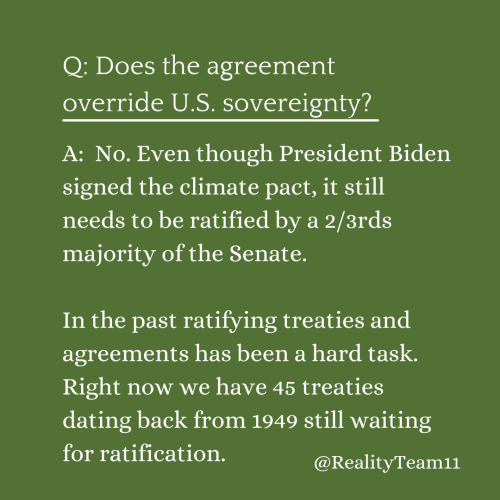
No. While the President does have the power to negotiate and sign treaties on behalf of the United States, all treaties and agreements need to be approved by the U.S. Senate before they become law.
The Senate requires a 2/3rds majority vote to approve a treaty or any agreement. Usually this is pretty hard due to partisanship in the senate.
There are currently 45 treaties and agreements waiting to be ratified dating back as far as 1949.
The Washington Post: The Glasgow climate pact, annotated
Time: Why It Feels So Hard to Understand What Really Happened at COP26
The New York Times: What Happened at COP26 on Wednesday: China and U.S. Say They’ll ‘Enhance’ Climate Ambition
CarbonBrief: COP26: Key outcomes agreed at the UN climate talks in Glasgow
Quartz: It’s not just Trump. The US has always broken its treaties, pacts and promises
Related Cards


