
Climate solutions: Renewable electricity
The IEA* laid out detailed steps that would get us to net zero carbon by 2050.
Step one: Clean up electricity.
We can use existing technology to shift power plants that make electricity from fossil fuels (oil, coal and gas) to renewables (hydropower, solar, wind, biomass and others).
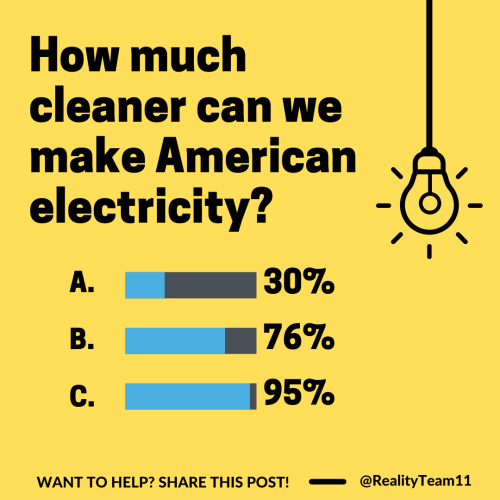
The Dept of Energy says yeah, we can do that.
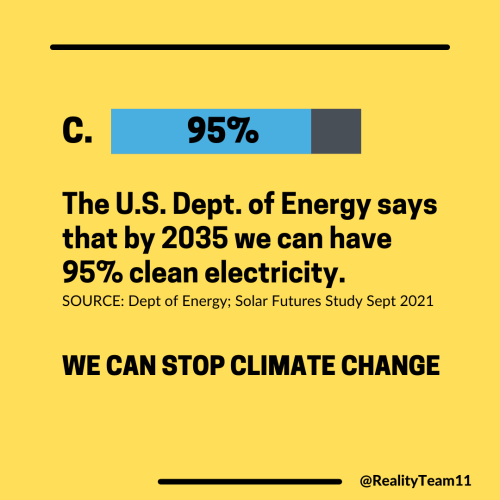
UPDATE! A new September 2021 follow up report from the Department of Energy now says that we can get to 95% clean electricity in the U.S. by 2035. That means they now think we can get further faster, particularly if appropriate investments are made to sustain the current pace of innovation to improve efficiency and storage capacity.
The DoE now calculates that the cost of the shift to renewable energy would cost about $225 billion, but that it would be paid for by savings from using renewables instead of fossil fuels.
The jobs outlook is also good. The report predicts solar energy will employ 500,000 to 1.5 million people across the country by 2035. The clean energy transition will generate around 3 million jobs across technologies.
Background
The recent report from the UN Intergovernmental Panel on Climate Change concluded that climate change is definitely real, definitely threatening and could bake, blow, flood and starve us of the face of the earth if we don’t act immediately to change the course.
The report shows that there is a point of no return on climate change. A point past which the changes to climate systems will be so big that there’s no way we can stop the damage from rolling forward.
The point of no return is roughly 20 years from now. We have 20 years to stop adding carbon (and other greenhouse gasses, like methane) to the atmosphere.
The problem: Too scary to read.
Why isn’t this solved yet?
There are three main reasons.
- Fossil fuel habits and money. We’re used to fossil fuels and there’s a lot of money involved.Fossil fuels have been the focus of our economy and culture for 100 years. And fossil fuel companies use their vast influence to delay dealing with the problem.
- The problem is too scary and seems like it’s still far off. Twenty years still seems like a long time, and the problem is so big and scary that a lot of people just prefer not to think about it. People already suffering from unprecedented storms, floods and fires are starting to get it however (hi, Florida, Texas and New York.)
- It seems like we have enough problems today. Pandemics, politics, the economy, family and jobs, and the broken ice maker in the fridge – it’s just too much.
Here’s the thing though. We already have the solutions to get us more than 50% of the way there. Here and now. And we’ll learn the rest as we go – if we invest in the science and technology now, we’ll be ready. We’ll make the 2050 deadline. We’ll be ok. But we need to act NOW. We don’t need a miracle, we need governments and corporations to get serious. We need to be certain that bad actors don’t confuse us with disinformation and misleading stories.
We need to act as though our lives (and beach days) depend on it. (They do.)
We can take control of climate change.
We can make the 2050 deadline.
We can lead the world to climate solutions.
We can compete with China.
We can grow the economy too.
*International Energy Association is an international body formed in the 1970s to deal with the gas shortages and set up a way for member countries to support one another in avoiding gas shortages and securing supplies. Their mission has evolved, and they are now one the most credible and important sources of climate change data and analysis.
IEA: Net Zero by 2050 – Analysis
US DOE Renewable Energy Lab: Renewable Electricity Futures Study
US DOE: Solar Futures Study, September 2021
US DOE: DOE Finds Strong Opportunity For Job Growth In Energy Sector Post-Pandemic
Related Cards


